

Why The Hunger Games: Sunrise On The Reaping Is The Darkest Movie In The Series
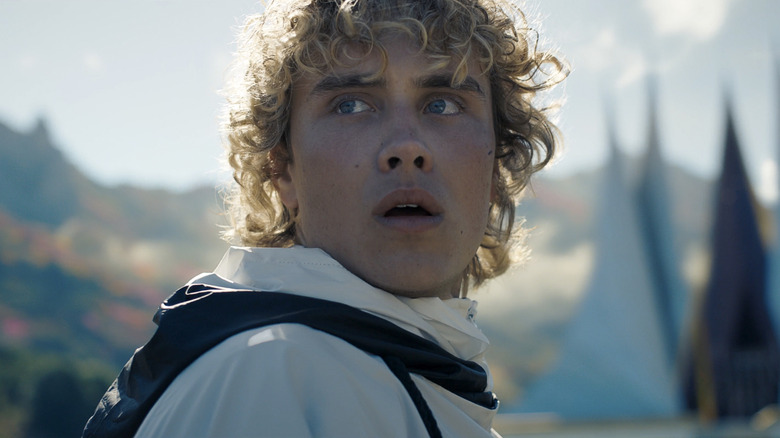
The following post contains spoilers for "The Hunger Games: Sunrise on the Reaping."
It's rare for a franchise to get better after 4 or 5 movies, especially when they are prequels that explore questions no one needed answered. It didn't work for "Star Wars," it didn't work for "Harry Potter," and it shouldn't work for "Hunger Games." At best, these prequels just introduced characters that don't matter in the large scheme of things because everything they do or accomplish gets erased in the original story, at worst they try so hard to answer questions no one cares about that it ends up tarnishing the original work.
And yet, when it comes to "Hunger Games," not only has the franchise improved with time, but the two spin-off prequels are arguably better than even the original series. The latest film, "Sunrise on the Reaping" deepens what came before, while introducing new characters that are as engaging as those we know and add to the larger worldbuilding of Panem. Or, as /Film's review puts it, "Beyond the shock value, this story remains human, emotional, and gripping from beginning to end."
Even if this movie doesn't have the compelling romance that was central to "The Ballad of Songbirds and Snakes," it delivers a harrowing tale of rebellion. What's more, this is somehow the darkest movie in the "Hunger Games" series, and it's not even close. Not just in terms of deaths — though there are some truly brutal deaths in the movie (which are somehow tamer than the book!) — but also in the overall tone the movie explores. This is the "Hunger Games" equivalent of "Andor" or "Rogue One," a bleak tragedy about one man who dared stand up against a tyrannical government and paid for it with everything he had.
Putting death in death games

The "Hunger Games" movies are full of death and suffering; it's part of the game. But "Sunrise on the Reaping" takes it to another level. Though it takes a long while before the nearly 3-hour runtime gets to the actual games, there's a feeling of hopelessness from the first moment. Early on, a kid gets shot for trying to escape the Reaping. Later, on the day of the opening ceremony, the youngest tribute from District 12, Loella, gets brutally killed in a chariot accident.
But it's not just the fact that there are plenty of deaths, or that they're horrible to watch. Sure, seeing poor Ampert get completely mauled by a swarm of cute forest animals and Maysilee Donner getting gored to death by birds is harrowing. The Capitol doesn't just kill children; it tortures them and pulls them apart and makes their parents watch.
Indeed, more than the deaths themselves, it's the meanness around them that makes this movie stand out. When Loella dies, it isn't a murder done by another tribute trying to get an advantage. Instead, it's an accident caused by Capitol audiences throwing flares at the parade circuit knowing full well it will cause the chariot horses to go berserk, because they want to see the tributes suffer. Compared to every other "Hunger Games" movie, the tributes are not only livestock sent to slaughter, or pawns in a political game. Here, they are subjects of absolute torture, playthings to be slowly toyed with and brutalized before getting discarded for the pleasure of others.
We especially see this in the presence of Ampert, whom we learn is only in the games as a punishment for his father Beetee's rebellious activities. Beetee is forced to mentor his own son and then watch him die.
The tragedy of Haymitch Abernathy
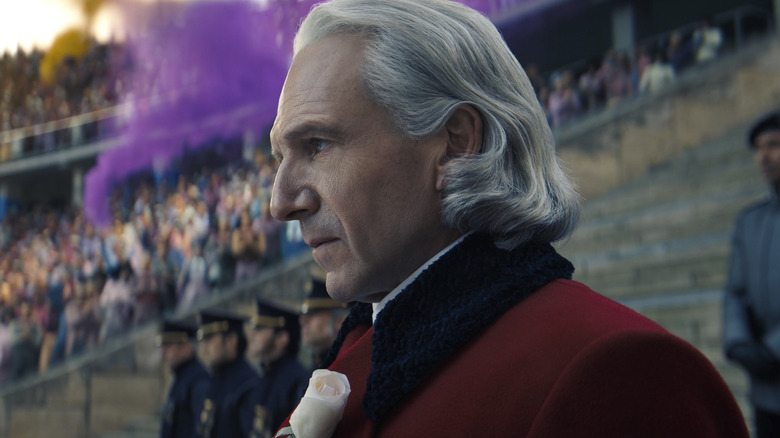
Throughout "Sunrise on the Reaping," there is a sense of hopelessness and inevitability. We know that, eventually, the Hunger Games end and the Capitol falls — but the characters in the movie don't know that. At every turn, Haymitch and his allies see their every effort get squashed and mocked. Their attempts at leveling the playfield just a little bit are met with overwhelming force. Even before the games begin, Haymitch knows he'll never get to go back home because President Snow has personally seen to it that Haymitch dies for his insubordination during the opening ceremony.
Then we get to the third act, where the movie just becomes a cruel feel-bad experience, as Plutarch Heavensbee convinces Snow to let Haymitch survive to prolong his suffering. Haymitch is forced to watch Maysilee die brutally at the hands of waterbird mutts while he is virtually unscathed. Then, even after he wins the games, Haymitch discovers that the televised games were heavily edited to make him look selfish and cowardly, a traitor to every one of his allies, who won only because he was lucky. As if that wasn't enough, Haymitch has to see his family and his girlfriend die horrible deaths after he goes back home from the death games, in what's without a doubt the most nihilistic ending in the franchise.
It makes sense, however. "Sunrise on the Reaping" takes place at a pivotal moment in the "Hunger Games" timeline, at the height of President Snow's power. We are far removed from the games being almost canceled due to lack of interest like in the previous movie, but also far removed from the simmering rebellion of the original movies. Here, Snow gets away with everything, and he relishes in the cruelty of his games.