

The Downfall Of The Terminator Franchise Can Be Traced Back To One Moment
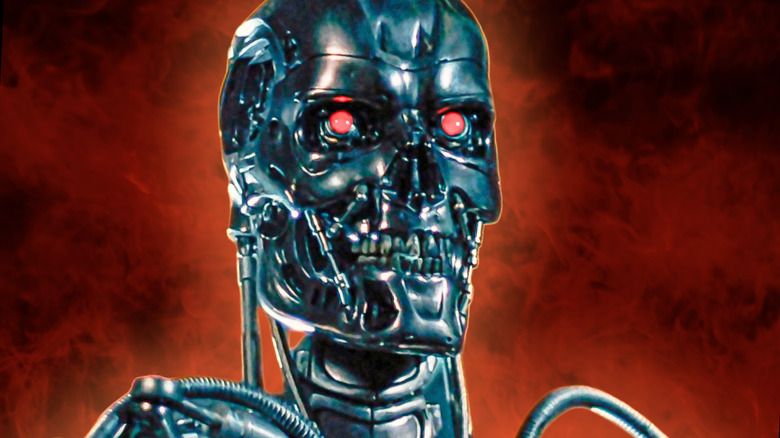
It's a question which has plagued the "Terminator" franchise for decades: why hasn't anyone been able to top the first two films? Setting aside the usual caveat that no sequel can hope to match the dizzying heights of some of the most influential sci-fi/action/horror movies of all time, it's a decent question. After all, every "Terminator" movie save one has involved star Arnold Schwarzenegger in a key role, so it's not like his absence has hurt the series. And even though the return of another key actor in the series, Linda Hamilton, helped 2019's "Terminator: Dark Fate," that film still had its issues. A conventional wisdom answer to the problem of rescuing the "Terminator" series is that the original creator/director James Cameron should fully come back and make another installment, yet his involvement with "Dark Fate" means success wouldn't necessarily be guaranteed.
The ultimate problem with the "Terminator" franchise is twofold. One issue is the staggering example set by the first two films, which would be hard for any franchise to overcome. The other concerns the one moment that the downfall of the franchise can be traced back to, which is ironically one of the moments most cited by fans as a highlight of the series: the ending of 2003's "Terminator 3: Rise of the Machines." To be fair, most of "Terminator 3," despite its decent quality, is to blame for putting the franchise on a path it can't quite escape from. Yet it's the ending, as bold as it is, which struck a deterministic note that ended up being too harsh for the series to bear. "Terminator" has always been dark, yet its hopeful subtext is key to its recipe, and that's something which has been left out of every installment since "Terminator 2."
Terminator 3 sacrificed the series' aspirational subtext for a cool twist
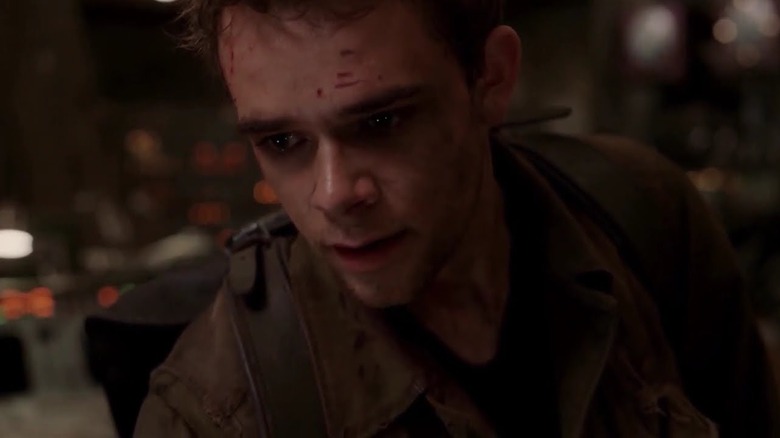
It's true that the general tone of the first two "Terminator" films is a dark, brooding, horrific one. After all, these are movies in which Linda Hamilton's Sarah Connor is on the run for her life from an unstoppable killing machine, where either she or her young son John suddenly find themselves having to survive the threats of a dark future while having little help from the modern day around them. Yet an important thing to remember about "The Terminator" is that Skynet's plan to assassinate Sarah by sending a Terminator back in time was only implemented because John wins the war against the machines in the future. "The Terminator" is a time travel story, and is thus subject to the various paradoxes inherent to the genre. Yet its tale has a deterministic logic to it, one which is predicated on humans surviving despite their near-annihilation by the machines.
"Terminator 3" effectively undoes the ambiguous hopeful ending of "Terminator 2," where Sarah and John had possibly prevented Judgment Day for good. While the third film's logic is sound from a time travel point of view (i.e. how could any "Terminator" movie have happened if Judgement Day never does), it does make "Terminator 2" feel too much like it was all for nought. Adding to that quiet despair is the bigger tragedy of actually seeing Judgment Day occur, meaning that the efforts of a now adult John (Nick Stahl) to try and stop it from happening again make not just "Terminator 2" but most of "Terminator 3" feel deflating. The ending of "Terminator 3" is a great example of how a cool twist can work logically, yet emotionally undermine a film (and, in this case, a franchise) too much.
The Terminator franchise has taken the series' dramatic tension in a confusing direction
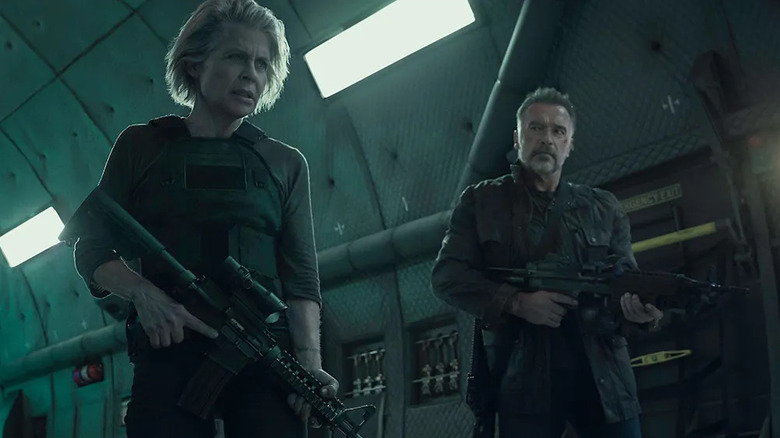
The first two "Terminator" films leaned into the time travel paradox by presenting a deterministic situation while supporting free will. "There's no fate but what we make for ourselves" is a key phrase which can be interpreted several ways, as either a bitter observation or a message of hope. While the deterministic path that "Terminator 3" and "Terminator Salvation" took was logically sound, they didn't provide enough of the aspirational side; the latter film was a time travel story in subtext only.
The next two movies in the franchise course-corrected in a bizarre way, embracing the wide-open possibilities of the series' time travel component with little to no regard for the characters or the audience. "Genisys" is too pleased with its twists to let any of them land emotionally. In comparison, "Dark Fate" has much richer characterizations, yet it alienates from the opening twist, and turns the series' lore on its head in a way that doesn't fully land. The franchise's one shining moment post-"Terminator 2," the TV series "Terminator: The Sarah Connor Chronicles," was sadly canceled just as the intricate narrative it weaved was bearing the type of lore-changing fruit that "Genisys" and "Dark Fate" tried too hard to grow.
In general, the "Terminator" sequels after "Judgment Day" have attempted to serve both the series' deterministic and free will concepts, which are inherently paradoxical. So, while every one of the "Terminator" sequels have introduced some fascinating (and occasionally excellent) ideas, they all revolve around an inescapable fate, whether it's one that already happened or one that will happen. While I believe the series' fate could still be changed, it's ironic that the thing we're hoping gets saved is now the "Terminator" films themselves.