

Carrie Review: Mike Flanagan Resurrects A Stephen King Classic With Mixed Results
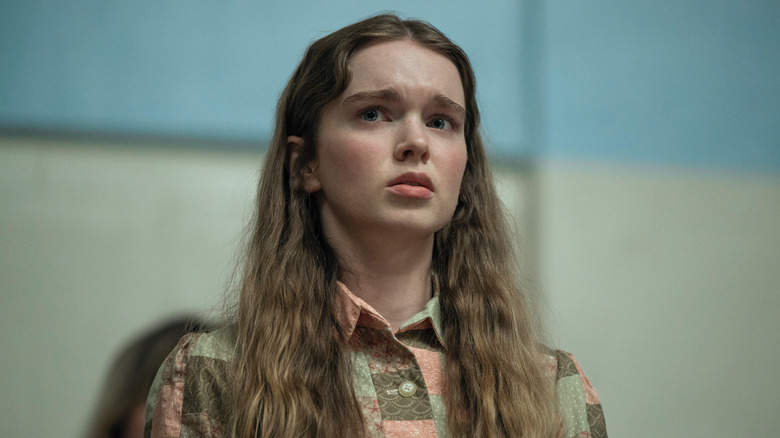
Everyone knows the story. The shy, bullied teenage girl. Her telekinetic powers. Her crazy religious mother. And a blood-drenched prom night massacre that goes up in flames. At this point, "Carrie" and its iconic imagery are firmly ingrained into the pop culture consciousness. So is the story of how it all came to be: a struggling high school teacher named Stephen King wrote a few pages, chucked it in the trash, and was then encouraged by his wife to finish what he started. You know the rest. King would become horror royalty; a best-selling author whose influence on the genre will be felt even long after he's shuffled off this mortal coil.
But King's "Carrie" would not be the success story we know it as today were it not for Brian De Palma's 1976 film adaptation, loaded with style and graced with a lead performance from Sissy Spacek as poor, tormented Carrie White. De Palma's movie helped increase the book's popularity (as well as King's), and remains a classic to this day. And it's not the only adaptation, either. There was, believe it or not, an ill-fated Broadway musical adaptation, as well as two different remakes: a 2002 TV movie penned by "Hannibal" creator Bryan Fuller, and a 2013 feature starring Chloë Grace Moretz. And oh yeah, there was the sequel-in-name-only, "The Rage: Carrie 2."
All of this is to say: "Carrie" has been done to death. What else is there left to say about King's super-powered outcast who lays waste to the town that dared mock her for being different? Enter Mike Flanagan, a filmmaker who knows a thing or two about King adaptations. Flanagan helmed the King flicks "Gerald's Game," "Doctor Sleep," and the recent "The Life of Chuck," and now he's set his sights on turning "Carrie" into a TV show for Prime Video. Rather than tell the same old story all over again, Flanagan and his team have opted for something that's frequently, drastically different. But is that such a good idea? And does it work?
Mike Flanagan's Carrie is not yet another remake
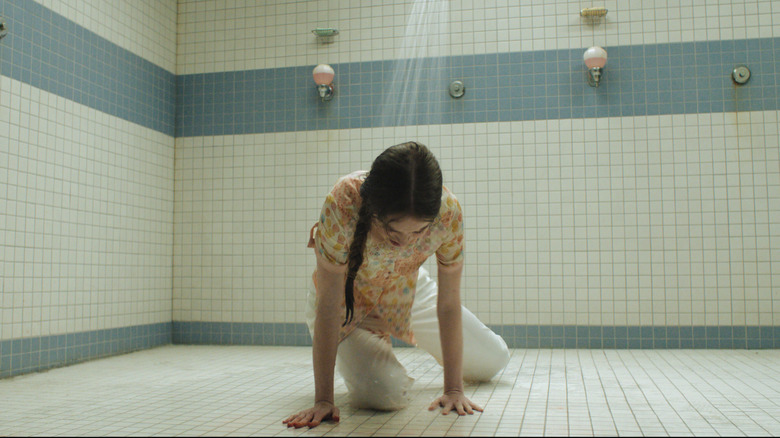
Before we go any further, let me just say I'm not a stickler for adaptations staying rigidly true to their source material. I'm not against this concept, of course, but I'm also okay if a filmmaker opts to try something different. And Flanagan has already proven he can do this with great results: his heartbreaking, excellent Netflix series "The Haunting of Hill House" bears almost no resemblance to the Shirley Jackson novel that inspired it, and the results are still wonderful.
Yet, we're all so familiar with how we expect a "Carrie" adaptation to play out that the new paths Flanagan and company decide to take us down often become jarring, even a little distracting. This is in part because Flanagan isn't chucking the entire text out like he (mostly) did with "Hill House." No, this "Carrie" does bear many of the familiar hallmarks of King's original novel and its other adaptations. But there are also big, unexpected swings here that I must confess left me slightly puzzled (don't worry, I won't dare give away any spoilers).
Perhaps "Carrie" simply doesn't lend itself to a TV approach. "Carrie" is one of King's shortest novels, which means any TV series is going to have to stretch the narrative out considerably. To do this, Flanagan and his co-writers expand the roles of nearly every character, and throw some new ones in, too.
This version of Carrie makes big changes to all of the characters
Flanagan's "Carrie" keeps the bullet points: there's a bullied high school girl with telekinetic powers, she lives with a domineering mother, and, as the first episode tells us right away, there was a prom night with a body count. But as the show unfolds across 8 episodes, "Carrie" subverts our expectations.
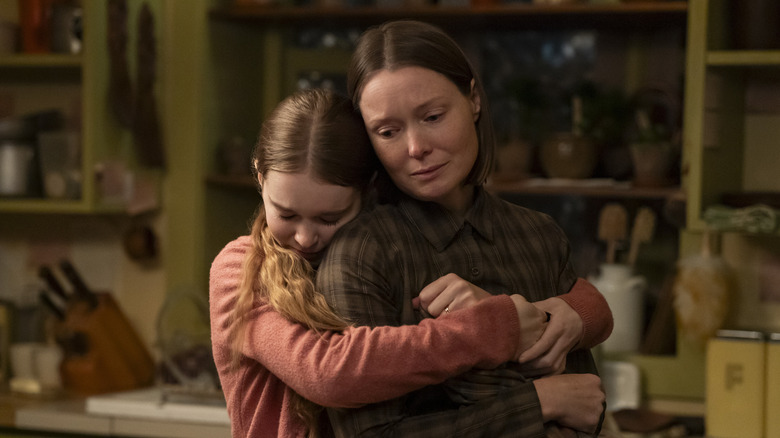
Perhaps the most notable change here is how hard the show works to humanize almost all of the characters. Carrie's mother Margaret is a monster in King's book and in De Palma's film (where she was memorably played by Piper Laurie, who earned an Oscar nom for her work). In this version, Margaret, played by frequent Flanagan player Samantha Sloyan, is ... complicated. She's still a bit of a religious fanatic, and since this "Carrie" is set in our increasingly fractured modern world, a deep distrust of the government has been added to her character.
But while Margaret White is traditionally an abusive lunatic, Sloyan's version is a bit softer, at least when it comes to Carrie. You get the sense that she really does love and care for her daughter — something previous adaptations didn't even hint at. We still wouldn't want to spend any time with Margaret White in real life, but in this incarnation, we can sort of understand where she's coming from.
Even some of the bullies get a more sympathetic approach in this Carrie
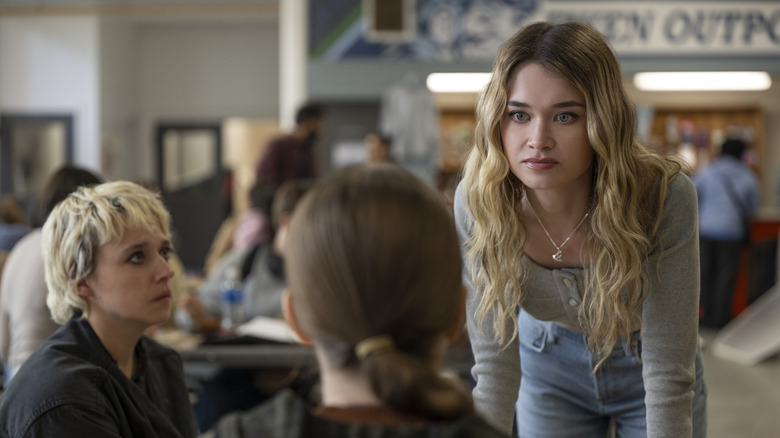
A similar approach is taken with the high school bullies who make Carrie's life hell. King's writing has a long tradition of psychotic teenage bullies who are rotten to the core and devoid of any redeeming qualities, and the bullies he created for "Carrie" are vile creeps. But this new "Carrie" attempts to try to explain why these kids do what they do. They're still bullies, but they're not pure evil.
The prime example of this is in the character of Carrie's lead tormenter, Chris Hargensen, played here by Alison Thornton. While Chris does many cruel things, we also get a glimpse into her fractured homelife and her own deep-seated insecurities; she's lashing out not because she's inherently bad, she just doesn't know any other way to express her frustrations, and Carrie becomes an unfortunate target.
This is where Flanagan's "Carrie" came closest to losing me — I simply don't think Chris needs to be softened in any way, shape, or form. But perhaps that's my own inherent bully-bias talking (I did not have an easy time in high school, folks, and if you asked me to have sympathy for some of my bullies, I'd be hard pressed to arrive there). At the same time, I appreciate the show's approach at trying something different here. I just don't think it succeeds on this front.
Star Summer H. Howell is the best part of the show
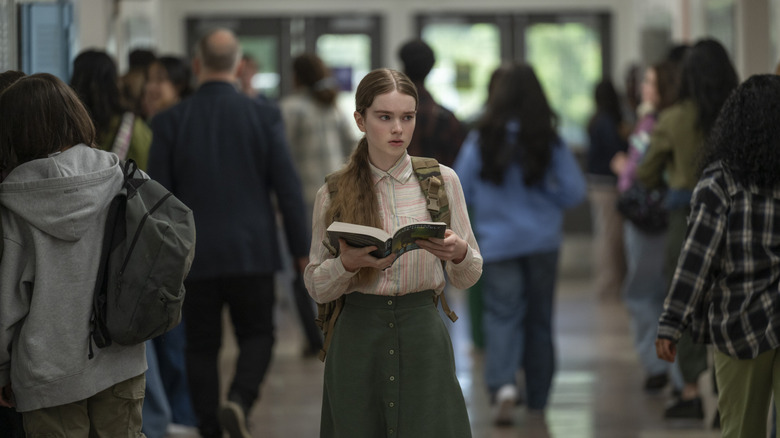
And then there's Carrie White herself. As our titular telekinetic, star Summer H. Howell is something of a revelation, easily the best part of this entire adaptation. While Sissy Spacek brought a haunted, emotionally stunted quality to her now legendary portrayal of the character, Howell's approach is much different. Her Carrie is inherently likable and almost painfully sweet. We're in her corner immediately. She's still a shy, sheltered kid, but she also is bursting with curiosity and wants nothing more than to find her place in a world ready to reject her.
As "Carrie" begins, teen Carrie White has spent seemingly her entire existence at home, sheltered from the world by her over-protective parents. But when Carrie's father is killed during a work-related incident, the young girl's life is drastically altered — as is the life of her mother. Margaret is forced to go out and get a job, and Carrie, who has been home schooled, is forced to go to the local high school.
It's there that she runs afoul of bullies and the insanity of modern life (social media bullying, something King couldn't even dream of back in the '70s, comes into play). She also finds some allies, like the well-meaning Sue Snell (Siena Agudong), who isn't above being cruel sometimes but also feels real sympathy for Carrie and tries to make her feel welcomed. There's also new teacher Rita Desjardin (Amber Midthunder), who makes it her mission to defend Carrie at one point. Carrie also gains the attention of the mysterious Emaline (Thalia Dudek), who seems to be the only student concerned at how far the bullies might go.
Carrie shines during its sweeter, kinder moments
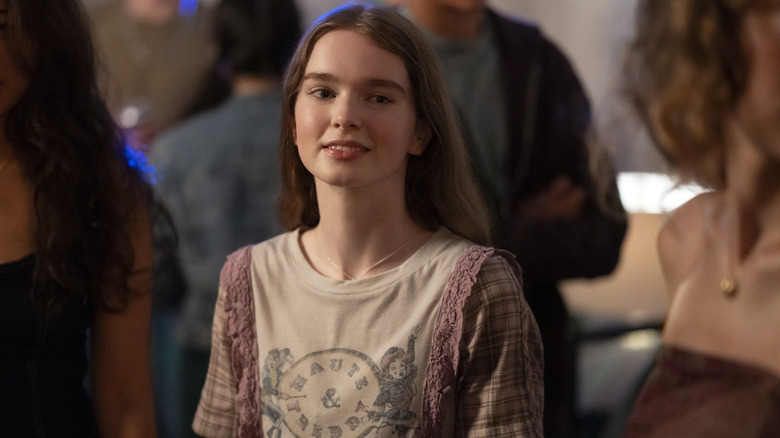
In the midst of this life-changing opportunity, Carrie begins to learn she has telekinetic powers, which are terrifying at first but also open her up to all sorts of potential. And while there are bursts of horror in "Carrie" (as you'd expect), the series works best when it finds kinder, more emotional moments for Carrie to grab hold of.
Flanagan is adept at telling scary stories that tug at your heartstrings, and there are moments here that I'll admit got me a little choked up. Perhaps the best of them is an early scene where Carrie is introduced to the school library and is astonished to learn she's allowed to read any book she might desire (something her mother has sheltered her from all these years). The look of stunned wonder on Summer H. Howell's face here broke my heart just a bit. I was also fond of a brief moment where Carrie, tipsy after attending a party, is being driven home and briefly (and obliviously) makes the car levitate off the ground with a just a simple swooping movement of her hand out the passenger window.
Unfortunately, "Carrie" starts to get lost as it journeys towards an ending we assume to be inevitable. Here is where things get frustrating, because to say too much would give away spoilers and reveal major changes that you likely won't see coming. All I can say is that "Carrie" introduces a major narrative wrinkle into the story of Carrie's powers, and while a certain part of this approach is taken directly from the novel, the end result feels misguided.
Carrie isn't a total success, but it's still worth watching
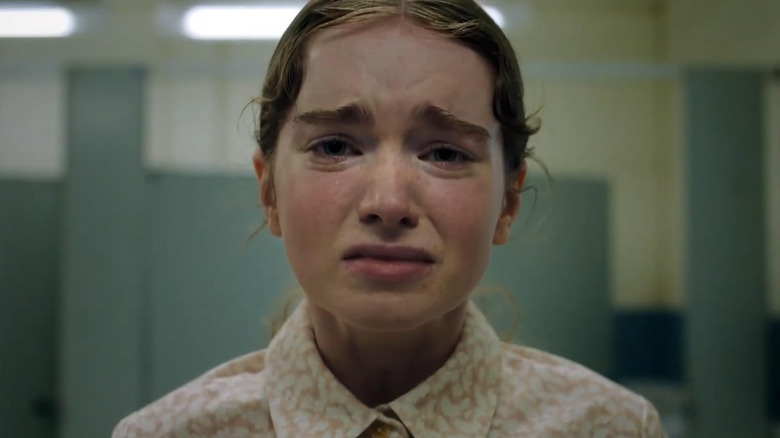
As a longtime Mike Flanagan fan ("Fanagan"? Is that a thing?), I was curious to see how he'd tackle "Carrie." At the same time, the fact that the story has been done so many times already dampened my interest. To Flanagan's credit, he's set out to try to do something different here, but it reaches a point where this "Carrie" starts to not really feel like "Carrie" anymore. Perhaps that's okay. Perhaps this "Carrie" is not for an audience overly familiar with the source material. Perhaps this is all for a younger audience, the kind who will appreciate the show's frequent (and distracting) needle-drops.
Ultimately, "Carrie" gets by on the sheer talent of its star, with Howell's performance so believable and total that she manages to make the character entirely her own — no small feat, since so many others have played Carrie before. I don't know what the future holds for "Carrie" the TV series (Flanagan recently said his "dream scenario" would be for this story to run three seasons), but at the very least, I'm glad we got to meet Summer H. Howell's Carrie White.
/Film Rating: 6 out of 10
"Carrie" is streaming on Prime Video on October 7, 2026.