

Before The Man From U.N.C.L.E, Robert Vaughn Starred In This Genre-Defining Western
We may receive a commission on purchases made from links.
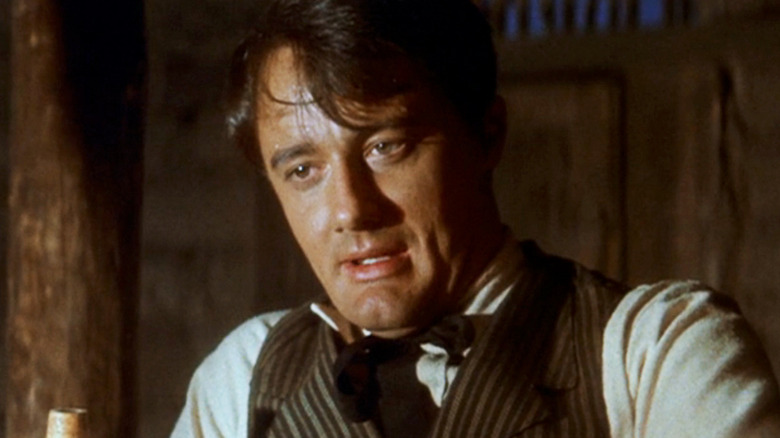
1960's "The Magnificent Seven" made stars of Steve McQueen, James Coburn, and Charles Bronson. But it also featured Robert Vaughn, who had just broken through the year prior with "The Young Philadelphians." When he joined McQueen, Bronson, Coburn, Yul Brynner, Brad Dexter, and Horst Buchholz for John Sturges' "Seven Samurai" remake, he was four years away from playing agent Napoleon Solo on "The Man from U.N.C.L.E." As such, Sturges' film was a major project for Vaughn, who managed to secure his spot among the gunslingers with surprising ease thanks to his "Philadelphians" performance.
Vaughn made his film debut in 1956's "The Ten Commandments," but his first significant role came the following year in Western "Hell's Crossroads," in which he played the infamous killer of Jesse James, Robert Ford. It was his performance as alcoholic veteran Chet Gwynn in "The Young Philadelphians," however, that proved to be his breakout, earning him a Best Supporting Actor Oscar nomination and the attention of Sturges, who sought out Vaughn just as The Screen Actors Guild had called for a strike.
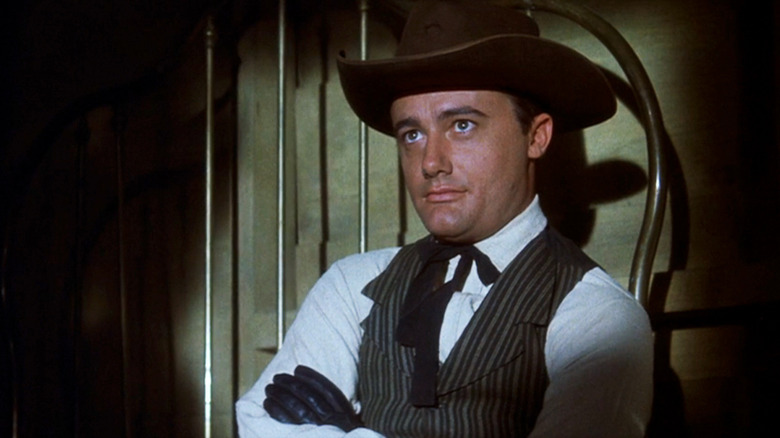
With the strike set to commence in the Spring of 1960, "The Magnificent Seven" faced a tight deadline. Sturges needed to cast his Western version of "Seven Samurai" as quickly as possible, and called Vaughn into his office. In his autobiography "A Fortunate Life: Behind-the-Scenes Stories from a Hollywood Legend," (via Cowboys & Indians) Vaughn recalled the experience. "An ax was hanging over every movie project in Hollywood," he wrote. "Unless the casting for a picture was completed by noon on a particular Friday, production couldn't begin." Luckily, Sturges knew he wanted Vaughn for the role of Lee, a gunslinger with a fear of death who's haunted by memories of his violent past.
The Magnificent Seven didn't get off to the most auspicious start
Akira Kurosawa wasn't too impressed with John Sturges' Western copy of "Seven Samurai," which he thought was "entertaining" but ultimately "a disappointment." The film was well received elsewhere, however, especially in Europe where it made enough money to make up for a less than stellar box office in the United States. Of course, it has since become known as one of the best Westerns of the 1960s and an indisputable classic — impressive considering Sturges was flying by the seat of his pants from the very beginning.
Though "The Magnificent Seven" is credited to writer William Roberts, it seems there was no screenplay to speak of for a while. As Sturges told Robert Vaughn during their initial meeting, "We don't have a script, just Kurosawa's picture to work from. You'll have to go on faith." Vaughn agreed. Also going on faith was James Coburn, a friend of Vaughn who the actor suggested to Sturges. After the director managed to cast the rest of his gunslingers before the strike commenced, filming got underway in Cuernavaca, Mexico.
For those who somehow haven't seen the film, it tells the story of a Mexican village menaced by outlaw Calvera (Eli Wallach) and his crew. The townspeople turn to Yul Brynner's shootist Chris Adams, who rounds up a team of six other gunslingers comprised of Steve McQueen's Vin Tanner, Charles Bronson's Bernardo O'Reilly, Brad Dexter's Harry Luck, Horst Buchholz's Chico, Coburn's Britt, and Vaughn's Lee — the only member of the crew who's reluctant to return to his violent past. Together they help the villagers fight back against Calvera and Lee is ultimately forced to overcome his trauma and embrace his gunslinging ways.
Robert Vaughn quickly became a star after The Magnificent Seven
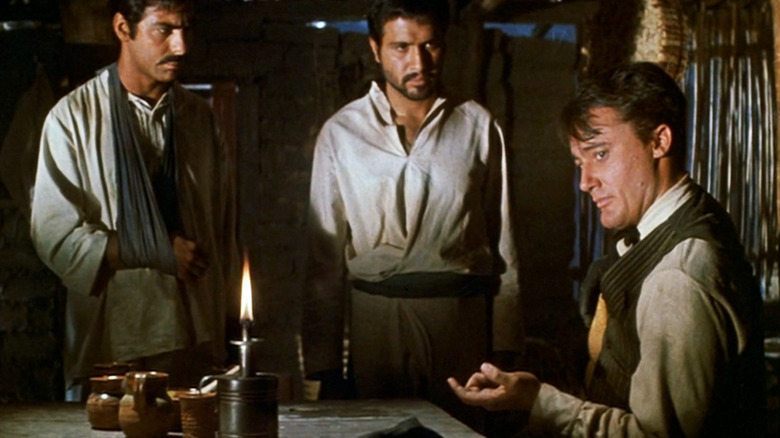
Both Robert Vaughn and John Sturges were familiar with the Western genre by the time they made "The Magnificent Seven." The latter directed 1953's "Escape from Fort Bravo," 1956's "Backlash," 1957's "Gunfight at the OK Corral," and even contributed to Rod Serling's pre-"The Twilight Zone" Western "Saddle the Wind." Vaughn, meanwhile, had appeared on multiple classic Western TV shows, including "Gunsmoke," "Zane Grey Theater," "The Rifleman," and "Wagon Train," as well as the films "Hell's Crossroad" and "Good Day for a Hanging." But "The Magnificent Seven" was by far his most high-profile Western up to that point.
The film didn't necessarily turn him into a star, but it did give him major exposure. It wasn't until 1964, when he debuted as Napoleon Solo on "The Man from U.N.C.L.E.," that he became a household name. The same was true of his "Magnificent Seven" co-stars, with Steve McQueen being the most obvious example. When the movie premiered, McQueen was starring as Josh Randall in the series "Wanted Dead or Alive." That combined with "The Magnificent Seven" ensured he had a level of notoriety but it wasn't until McQueen re-teamed with Sturges for 1963's "The Great Escape" that he became a bonafide superstar.
Meanwhile, Vaughn had spent the time since "The Magnificent Seven" appearing on yet more Western series including "The Virginian" and "Bonanza." In 1964 he debuted as Solo opposite Scottish actor David McCallum as agent Illya Kuryakin in "The Man from U.N.C.L.E." While McQueen became a movie star, then, Vaughn became TV royalty. But considering how big a show "The Man from U.N.C.L.E." was, he was almost as well known as his "The Magnificent Seven" co-star. To think it all started with a hasty meeting in John Sturges' office.