

This South Korean Sci-Fi Movie Takes One Of The Biggest Cinematic Risks Of 2026
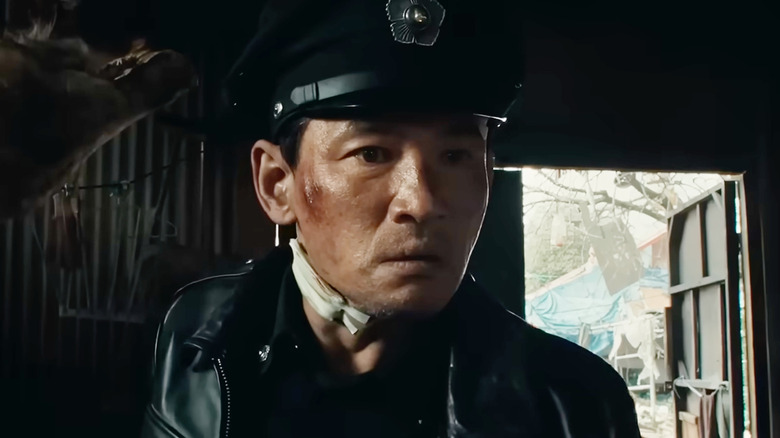
Spoilers ahead for "Hope."
Show business is an industry that is oddly contradictory. The idea is to maximize profits while minimizing risk, yet, as with any art form, the greatest rewards often come from taking the greatest risks. However, there are no guarantees. For these reasons, we've seen the film industry (particularly big-budget Hollywood releases) become increasingly reliant on intellectual property. So many studios believe that squeezing IP dry is the best way to go, especially as passionate fandoms continue to support their chosen property like it's a sports team or whatnot. Yet, the seams of this strategy are certainly beginning to show. The once-mighty Marvel Cinematic Universe has suffered the effects of over-saturation at the box office, while the record-setting "Star Wars" franchise took a hit when "The Mandalorian and Grogu" under-performed earlier this year.
The lesson that Hollywood needs to relearn is a simple one, which is to continually be innovating and taking risks on original work. Of course, the risk part of that equation is undoubtedly what keeps studios skittish. Although Hollywood might be in too precarious a position to take leaps of faith right now, perhaps the South Korean film industry can provide a light to lead the way. That light might be arriving quite soon, with the U.S. release of Na Hong-jin's "Hope" this week (courtesy of the American indie distributor Neon).
"Hope" is unique and bold in several ways, not the least of which is its secret status as an original franchise starter. That's right: "Hope" ends on a full-blown cliffhanger, an incredibly rare thing for a movie not based on some pre-existing IP. It's a huge cinematic risk, especially in 2026. Yet, true to its title, "Hope" might get the industry excited about taking a gamble on big-budget original material again.
Hope handles its cliffhanger more like a pre-existing IP
The concept of a movie leaving the door open for a sequel is hardly new. Even leaving aside the film serials of cinema's first few decades, numerous genre movies have ended on an unresolved note regarding the possible return of a creature or monster or some such. When sequels became a more common occurrence during the 1980s, franchises started to become less anthological (á la the James Bond or Godzilla films) and more serialized. Thus, while a horror or sci-fi flick might contain a mostly definitive ending, there would often be some hint that things could continue should the movie be successful enough. That trend used to be the norm until adaptations of lengthy book series (namely "The Lord of the Rings" and "Harry Potter") became massive hits, leading to films that didn't just hope for a sequel but planned on several.
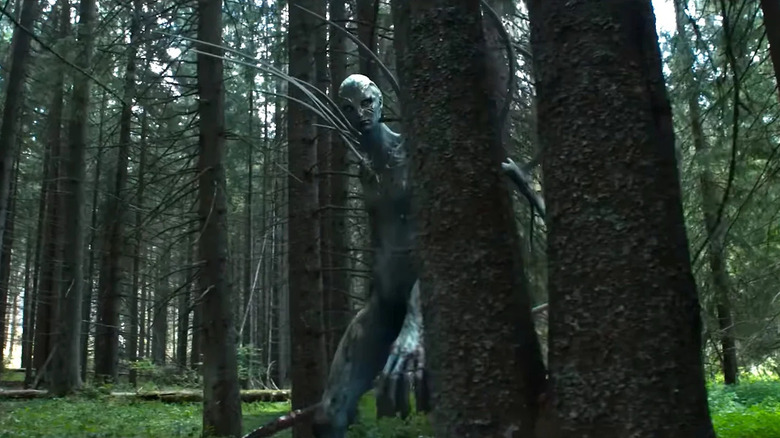
So, while there have been plenty of first installments that leave massive chunks of story to be told later, it's incredibly rare for a movie like "Hope," which isn't based on a novel, comic book, video game, toy line, or any other type of pre-existing media. The film follows a group of humans from a small village in South Korea named Hope Harbor as they encounter and combat a mysterious alien invasion. While the movie is generally easy to follow, it leaves a massive number of questions unanswered, including who these aliens are, what they want, and what will happen to the village of Hope Harbor and its denizens. These are fundamental elements of the larger story left unexplored, something which is common to see in a film adapted from a pre-existing IP but virtually unheard of for something original and new.
Hope is a necessary gamble for cinema
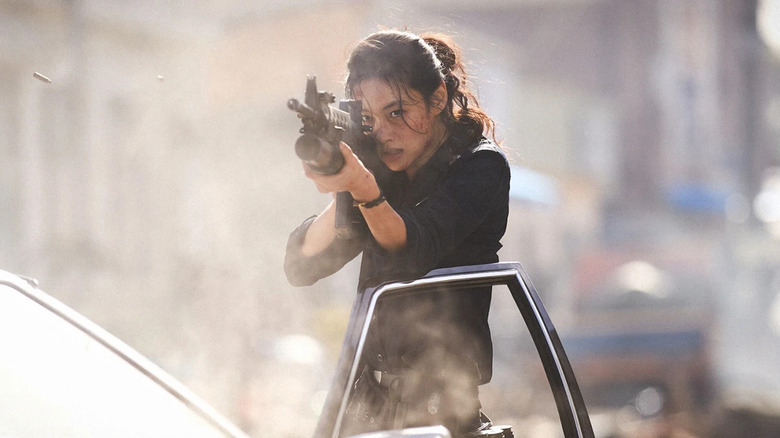
As of this writing, the future of the "Hope" franchise is still up in the air. Yet, that's what makes the movie and its "Part One of ?" status so intriguing and fascinating. Unlike a novel, video game, or comic book adaptation, there's no material to use as a guideline for the future. Even James Cameron's "Avatar" film series, one of its closest antecedents, began with a mostly standalone movie. For now, all Na Hong-jin has revealed is that a sequel to "Hope" has already been written, but that's about it. The movie opened in South Korea in July, making $35.3 million at the box office against its $46 million budget (reportedly the highest budget for a South Korean film to date). It's possible that the movie's international box office take will help push it over the edge to warrant a part two, but nothing is certain at this point.
What is certain, at least in my view, is that something like "Hope" is necessary to help pave the way back to a more creatively diverse film industry. We've been stuck in IP hell for too long, with some franchises now on their third or fourth reboot! Whatever happens, Na should be commended for how all-in he's decided to gamble on "Hope." Not only does it leave audiences hanging, it's also an original R-rated genre film that runs 156 minutes long. While the movies are entirely different in tone and style, it feels like the last major big-budget release with this much chutzpah was the Wachowskis' "The Matrix" back in 1999. Who knows if Na's film will have as much impact, but when it comes to the future of this property, I'm choosing to be hopeful.
"Hope" is now playing in U.S. theaters.