

Star City's Nikolai Fyodorov Reference Has A Much Deeper Meaning Than Fans Think
Spoilers of the world, unite! Major plot details from Episodes 1 and 2 of "Star City" follow.
Raise your hand if you expected a philosophy lesson while watching the latest episode of "Star City." So far, the true appeal of the Apple TV series is that it's many things at once: a straightforward prequel/spin-off/companion piece to the sci-fi joys of "For All Mankind," a Cold War paranoid thriller in the same vein as "The Americans," and a "Chernobyl"-like exploration into what happens when bureaucracy and politics interfere with common sense and progress. But Episode 2, titled "A Bear on a Chain," takes us to some thematically rich territory, courtesy of a stray reference to one of the most important figures in all of Russian philosophy that most viewers may not even pick up on.
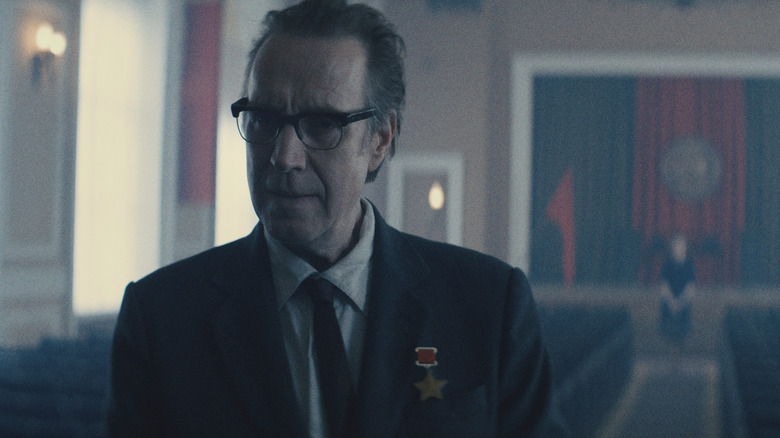
This one's for me and the 15 other weirdos who find this sort of thing fascinating, I'll wager. Early in the episode, our unnamed Chief Designer (Rhys Ifans) bristles under his new orders to move up the lunar base mission to unreasonable timescales. We see him visiting some sort of secret location, but the pieces don't click into place until later. Sergei Nikulov (Josef Davies) will later play a significant role in Seasons 2-4 of "For All Mankind," but for now he's simply the young engineer who impresses the Chief Designer with his outside-the-box thinking. He pays a visit to Sergei's home and finds a book by philosopher Nikolai Fyodorov lying around — a "forbidden" text that runs counter to Soviet ideals — but this only further ingratiates Sergei with his boss.
As it turns out, this reference is a clever way to broaden the horizons of "Star City," incorporate some foundational Russian philosophy, and take us nerds back to school.
Star City's Nikolai Fyodorov reference is a perfect parallel to its ongoing space race
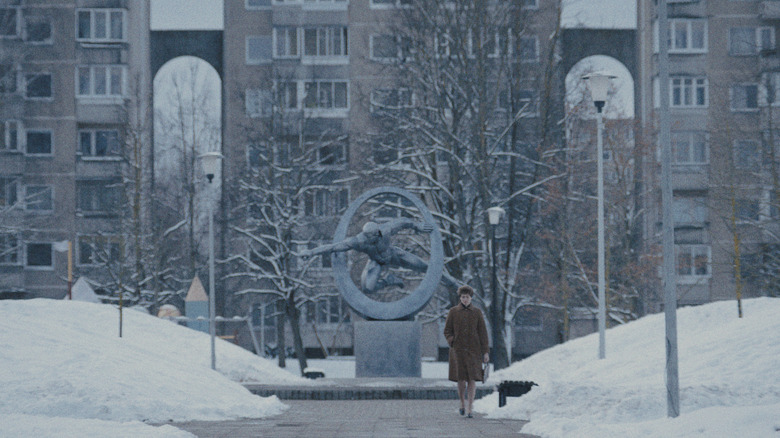
Pay attention, aspiring writers. If you're ever struggling with how to communicate a character's motivations to an audience without outright saying it, simply throw some Russian literature at us instead and trust us to do a little research. Okay, what works for "Star City" may not necessarily work for any other story out there, but boy is it effective here. The Chief Designer's quiet approval of Sergei and his choice in philosophy ends up being the difference-maker in letting him in on his scheme: surreptitiously conduct space operations of his own, under the Soviet Union's very nose, on missions designed to move all of humanity forward.
So why Nikolai Fyodorov? The forgotten philosopher (among those of us in the West, at least) was actually a wildly influential figure in Russia during the 1800s and beyond — particularly during the space race. His radical teachings on "cosmism" proposed finding a feasible way to achieve immortality and, as explained by BBC.com, played a key role in spurring his comrades' enthusiasm to literally reach for the stars. By the time of the space race, his religious followers had fallen entirely out of favor with the state, but the message lived on ... and even thrived among more enlightened circles.
As the Chief Designer later explains to his acolyte, Fyodorov has everything to do with his secret plot to revive past Soviet space triumphs (not unlike "Star City" itself). "Immortality, Sergei. Victory over the final enemy." At a crucial moment when Soviet ambitions look no further than the moon, the Chief Designer sets his sights much higher — on the cosmos themselves.
New episodes of "Star City" stream on Apple TV every Friday.