

Spider-Noir Review: Nicolas Cage's Idiosyncratic Performance Keeps This Spider-Man Series Swinging
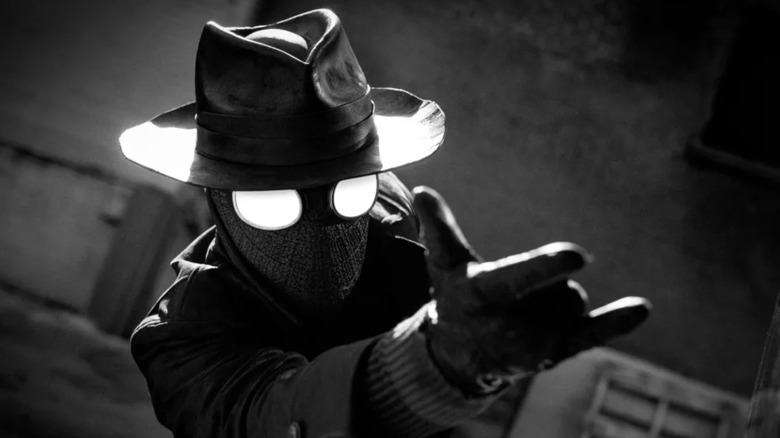
One of the ways that comic book superheroes have remained in print for multiple decades is embracing artistic freedom, adaptation, and diversification. It's that spirit which led to the character Spider-Man Noir, created by David Hine and Fabrice Sapolsky during a moment in 2009 when Marvel Comics had many of their flagship characters reimagined through a film noir lens. While the X-Men, the Punisher, and Daredevil all got similar treatment, Spider-Man Noir proved to be the most popular. As proof, he turned up as a supporting character in the 2018 animated multiverse romp "Spider-Man: Into the Spider-Verse," in which he was voiced by none other than Nicolas Cage. At the time, Cage's appearance seemed like a clever bit of stunt casting, especially given how stuffed "Spider-Verse" and its sequel, "Across the Spider-Verse," were with vocal talent and Spidey variants.
However, the new series "Spider-Noir" demonstrates that neither Cage's casting nor the character himself was a fluke. Even though showrunners Oren Uziel and Steve Lightfoot make a point of underlining that this Spider-Noir is not the same Spider-Man Noir as seen in the "Spider-Verse" films (Cage played a version of Peter Parker in the animated features; his character in "Spider-Noir" is named Ben Reilly), it's clear that Cage is using the opportunity to expand and enrich his take on the character. Fortunately, the writers, directors, and ensemble cast surrounding him seem just as game as he is, making a series that's a dizzying, fresh blend of film noir tropes and superhero action, with some classic pulp sci-fi and horror thrown in for good measure. As befits a Cage vehicle, "Spider-Noir" is certainly doing its own unusual thing, but if you can get on its vibe, it's a gas with some real moxie.
Spider-Noir smoothly fuses superhero fare with film noir
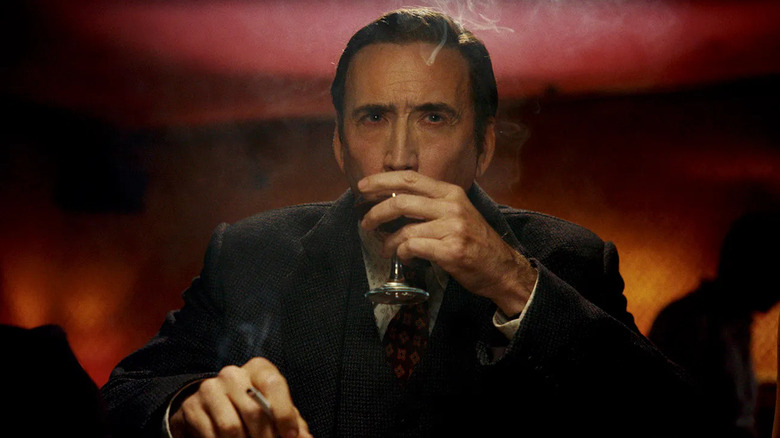
For those coming to "Spider-Noir" completely cold, it's possible that its blend of elements may seem utterly bizarre. Set in a fictional, alt-universe version of 1930-something New York City (more on that later), Cage's Ben Reilly is a private detective chasing philanderers and other low-level cases. Thing is, he used to be The Spider for several years post-WWI, after accidentally gaining his powers during the war. After the murder of his fiancé, Reilly hung up the costume, only for crime lords like Silvermane (Brendan Gleeson) to rise by plunging the city into a crime spree. In true noir fashion, a seemingly innocuous case causes Reilly to inadvertently follow a trail which leads not just to SIlvermane, a morally ambiguous chanteuse (Li Jun Li), and a handful of superpowered foes, but also a possible reemergence of The Spider.
"Spider-Noir" is typical of most streaming series in the way that it's not really an episodic experience, but rather one long story stretched out to eight episodes. While this can be a momentum-killer for other shows (especially a comic-book based series), "Spider-Noir" cleverly utilizes its genre influences and character ensemble to keep things cohesive and not lose momentum. This can inevitably lead to some bifurcation — this episode (or scene) is much more of a noir bit, this one's more superhero, and the like. Yet when the series is able to fuse the strands of its DNA together (and it does so more than once), it sings like a canary. This isn't just a narrative or tonal boon to the show, either. When something like the visual effects aren't quite up to snuff, or the pacing is a little lackluster, the variety of it all never lets the show go off the rails.
Nicolas Cage delivers another iconoclastic performance
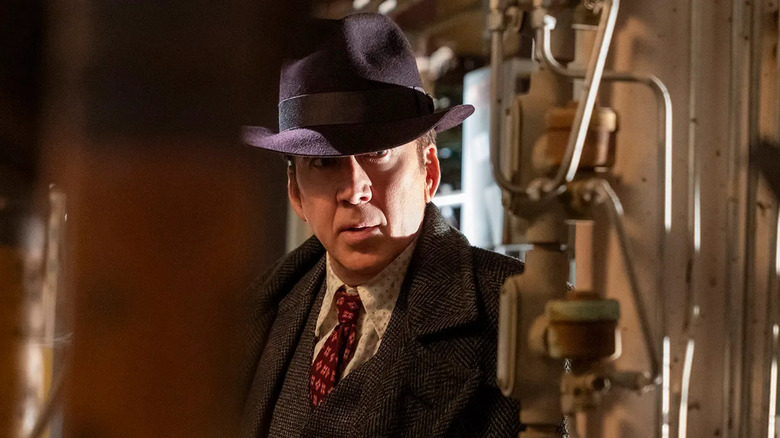
"Spider-Noir" has a fantastic cast, from heavy hitters like Brendan Gleeson and Li Jun Li to "New Girl" veteran Lamorne Morris and Karen Rodriguez. Some actors fit the series like a glove thanks to their past work, especially Lukas Haas (from "Brick") as Silvermane's lead henchman, and Jack Huston (of "Boardwalk Empire") as Flint Marko. Yet "Spider-Noir" is undeniably the Nicolas Cage show, and Cage embraces the role and the series with as much gusto as he's tackled anything in his career. The one carryover from his "Spider-Verse" performance, in which he intentionally mimics the speech patterns and cadences of popular noir actors of the era like Humphrey Bogart and James Cagney, is not only present, but becomes a major facet of Ben Reilly's makeup.
That's just the tip of the iceberg. You want tics? Cage throws in a few signature theatrical motions and line deliveries, adding to them some new wrinkles, like Ben becoming more spider-like when injured. You want drama? Cage's Reilly is soaked in Depression-era malaise, his bitter cynicism masking the good man who's desperate to believe in something again. You want romance? Reilly strikes up a will-they, won't-they flirtation with the femme fatale Cat, leading to a moment which results in yet another iconic Spider-Man smooch (I suppose every Spidey is contractually obligated to have at least one). Cage has been on a roll ever since 2018's "Mandy," and "Spider-Noir" feels like the superhero lead performance he always had in him but never quite got to deliver before now. (For those of you yelling "what about Ghost Rider?" from the back, that character's hero status, along with the quality of those films, is debatable.) The series has a lot going for it, but it's worth watching for Cage alone.
Spider-Noir is best enjoyed if you don't let its oddities confuse you
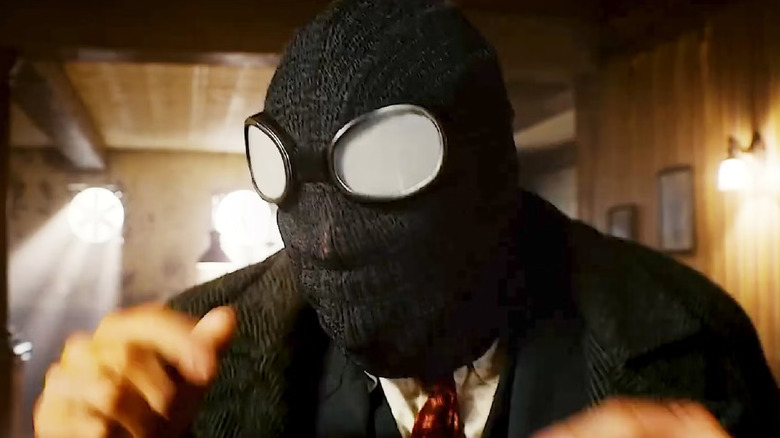
"Spider-Noir" is a consistently exciting watch. One of the biggest reasons for this is its idiosyncrasies, and they sometimes threaten to hurt more than help the show. For one thing, the show indulges in its historical trappings yet takes so much license with them that it can start to feel too confusing. Even a question as simple as "what year does the series take place?" becomes muddled when considering various forms of evidence: in one scene, Reilly watches 1936's "Great Guy" with James Cagney. However, in another scene, Reilly mentions that it's been 15 years since the end of the war, which would place the show in 1933. That's firmly during the Great Depression, which is also frequently referenced. Yet why does the show's POW camp subplot feel so World War II coded? Then there's the big elephant darkening the door of "Spider-Noir," the fact that the series is simultaneously presented in black and white and color for seemingly no good reason.
The show never really gives answers to these questions. Yet if one takes the series at face value, it doesn't need to. After all, it's easy to handle some historical fudging if the point is to present an alternate universe. One of the pleasures of the series is to see the familiar — namely famous Spider-Man characters — adapted into new guises, providing new and enticing dimensions to folks like the Sandman, the Black Cat, and Spidey himself. "Spider-Noir" is one of the most exciting and creatively fertile superhero works to be released in the last couple years, and while it may be a bit batty, I think it's the bee's knees.
/Film Rating: 9 out of 10
"Spider-Noir" debuts on Prime Video on May 25, 2026.