

Backrooms Review: Kane Parsons's Debut Is A Skin-Crawling Liminal Nightmare
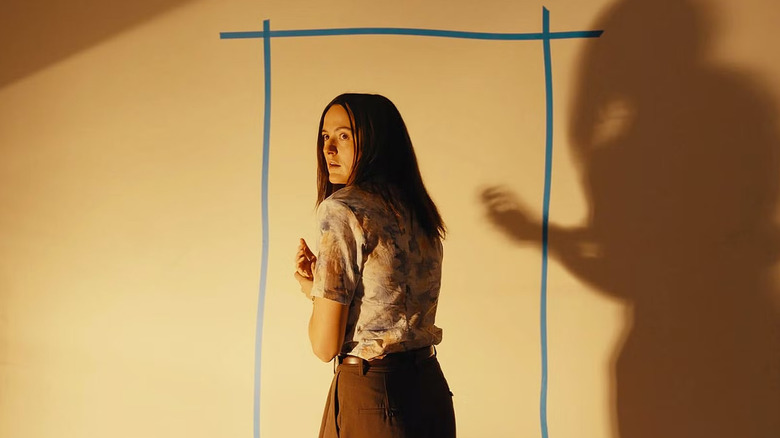
Kane Parsons' "Backrooms" arrives carrying the kind of mythology most debut filmmakers could only dream of. Parsons, the youngest filmmaker ever to work with A24 and among the youngest directors to helm a studio-produced feature, expands his viral liminal-horror web series of the same name into something more ambitious than a straightforward creepypasta adaptation like "Channel Zero." The result is an unnerving psychological horror-drama that thrives on atmosphere, uncertainty, and the queasy feeling that reality itself has quietly slipped off its axis.
From its opening, "Backrooms" demonstrates a suffocating sense of dread. Parsons understands that the true terror of liminal horror isn't what's lurking in the shadows, but the endless, uncanny emptiness surrounding it. With flickering fluorescent lights, stale yellow corridors, and abandoned office spaces that seem to stretch forever, the film weaponizes negative space with shocking assurance. For a movie built largely from empty rooms and long hallways, it's incredibly hypnotic, pulling viewers deeper into its maze-like hell, one unnerving room at a time.
Renate Reinsve stars as Dr. Mary Kline, a therapist who ventures into an otherworldly dimension in search of her missing patient, Clark (Chiwetel Ejiofor), a divorced salesman who uncovers the titular backrooms (aka "The Complex") in the basement of his furniture store. Following the film's world premiere, critics were united in their deep affection for Parsons' horror story, and with good reason. "Backrooms" is a skin-crawling, liminal nightmare. Even if the existing web series arguably works better as a medium for the seemingly infinite possibilities found in the world Parsons created, the film will certainly captivate audiences beyond the millions already familiar with his work. As a feature, the story sometimes feels like it's fighting its own destiny, but when "Backrooms" works, it's an arresting triumph and one of the strongest debut features in years.
Backrooms solidifies a new wave of horror that is here to stay
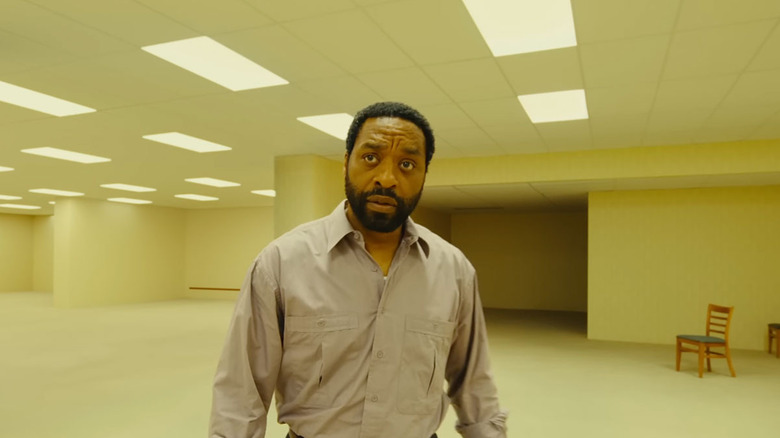
Whenever characters enter The Complex, the film puts the audience on the precipice of a panic attack. The scares arrive sparingly but land forcefully, aided by Danny Vermette's claustrophobic production design, crafted alongside Kane Parsons' distinct vision, and a soundscape engineered solely to make audiences physically uncomfortable. What elevates the film beyond internet-creepypasta novelty is its commitment to mood over explanation. Parsons wisely resists over-clarifying the mythology, even if the screenplay occasionally edges too close to pinning down what made the original concept so chillingly mysterious.
Anyone familiar with the web series knows its greatest strength was the unlimited potential of its world — the sense that these backrooms could swallow stories, and us, whole. Compressing that sprawling existential terror into a feature-length narrative sometimes makes the film feel like it's clashing against the very nature of its existence, but the tension is so well executed that there's no need to get hung up on the specifics.
Nevertheless, the film finds sturdy footing thanks to two compelling performances from Chiwetel Ejiofor and Renate Reinsve. Both actors ground the movie's increasingly surreal descent with enough emotional weight to keep the audience tethered as the film spirals deeper into psychological madness, save for one overwrought monologue that felt like an inclusion to keep normies from scratching their heads too much. They serve as human anchors in a story that otherwise threatens to dissolve completely into abstraction.
That suspense — between narrative structure and pure experiential horror — is ultimately what makes "Backrooms" so mesmerizing. Even when the narrative stumbles, Parsons' voice remains unmistakably singular. Few debut horror films feel this fully realized stylistically, or this committed to creating an atmosphere.
The future is a dead mall theory comes to life
The "Backrooms" web series was created after Kane Parsons taught himself to use Blender and Adobe After Effects, and the film combines those digital tools with 30,000 square feet of a physical set. With rooms filled with halves of furniture, piles of chairs, and facsimiles of interior decoration, objects, and even people scattered throughout, "Backrooms" transforms "the future is a dead mall" theory into a tangible reality. The film visualizes a cultural anxiety centered on the slow collapse of public gathering spaces and the replacement of human interaction with sterile digital substitutes. The decline of third spaces, fueled by e-commerce and growing reliance on online communities, is pushing society toward a future of abandoned, desolate environments. Shopping malls, office parks, and corporate plazas already feel eerily transitional, existing more as empty infrastructure than places designed for connection.
At the same time, the internet itself has become its own form of corporate junkspace: a hollowed-out, repetitive virtual landscape dominated by automated content, targeted advertisements, AI-generated media, and armies of bots. The faster it happens on the internet, the faster it will cross-contaminate our own reality. "Backrooms" blurs that line with brilliant precision, indicating that it's already happening. Whenever "Backrooms" leaves The Complex, Parsons transports the audience into a reality as artificial as the perpetual yellow corridors beyond the blue painter's tape door.
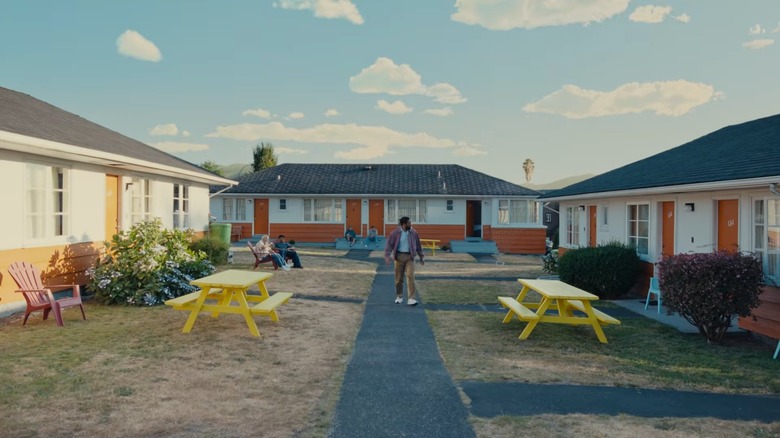
There's a cold, synthetic quality to Dr. Kline's office and apartment, to Chuck's furniture warehouse, and the housing complex where his employees — Kat (Lukita Maxwell) and Bobby (Finn Bennett) — reside. It's a creative decision right out of the "Severance" playbook, a show also inspired by the terror found in clinically corporate liminal spaces.
Backrooms is sure to raise your blood pressure
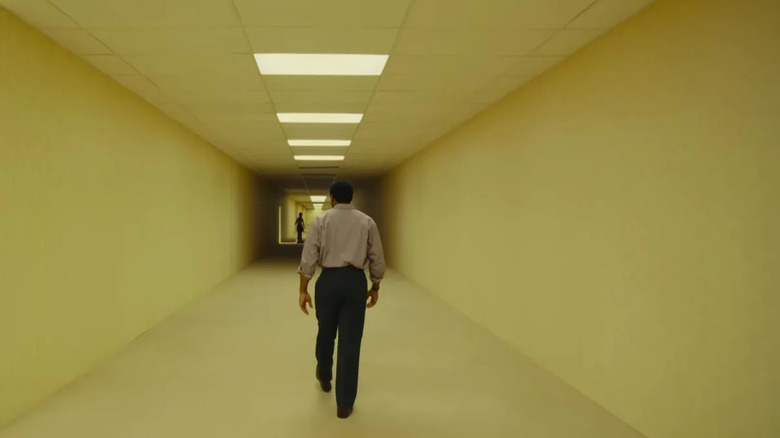
Like "Skinamarink" before it, "Backrooms" may not entirely live up to the impossible hype surrounding it for everyone. Still, for those operating on the same wavelength as Kane Parsons, it's bound to rattle you to your core. I am the type of person who is considerably affected by liminal horror. My mind plays tricks on me even without the looming promise that "something here is not right," so forcing me into the POV of someone in The Complex is a guarantee that my imagination is going to go haywire, my blood pressure is going to rise, my muscles are going to tense up, and (apologies to whoever sits next to me), I'm going to start sweating. Like the web series that came before, "Backrooms" got under my skin and irreparably changed the way I view barren spaces.
He might be a filmmaker currently too young to legally drink in the States who undoubtedly had the mentorship of producers like Mark Duplass and Oz Perkins to show him the ropes on this first feature, but Parsons announces himself as a filmmaker worth watching closely, delivering what may be the strongest creepypasta adaptation yet — and a deeply unsettling reminder that sometimes the scariest thing in the world is confronting the inaccuracies of existence. The film's haunting final image lingers long after the credits roll, the kind of ending designed to inspire immediate post-screening debates in theater lobbies and Reddit threads alike. I can't wait to see what fresh hells await us from Parsons next.
/Film Rating: 7.5 out of 10
"Backrooms" opens in theaters on May 29, 2026.