

Passenger's Director Has The Exact Same Issue With Horror Movies That You Do [Exclusive]
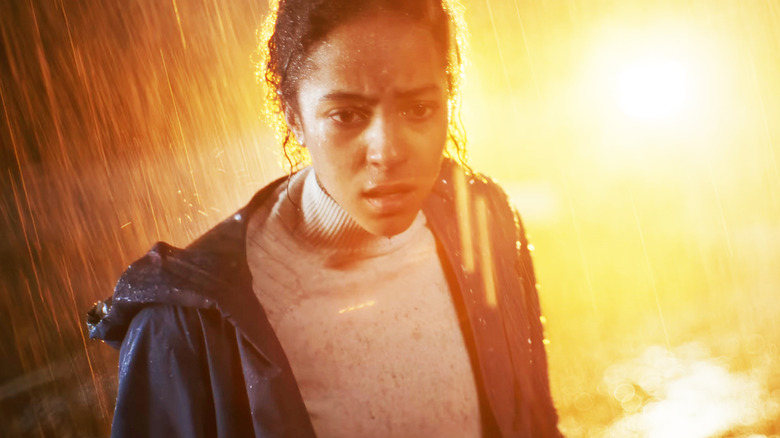
Horror is having a moment as filmmakers turn to the genre and its relatively small budgets to get their projects greenlit. This has resulted in some innovative and memorable movies from Zach Cregger's genuinely shocking (and fun) "Barbarian" to the experimental kindertrauma "Skinamarink." But even with all this innovation, horror isn't immune to some unfortunate and longstanding cinematic tropes like, say, being way too damn dark. André Øvredal, director of the upcoming "Passenger," has certainly noticed that particular trend, and he's about as thrilled with it as you are.
In a conversation with /Film's Jeremy Mathai, Øvredal was asked about the phenomenon of horror films being too dark. "Yes, I do agree," he said, "That's actually one thing I wanted to avoid since you asked that in a previous question, is that it becomes too dark. Because I was actually just watching a movie yesterday, and I couldn't see anything, and it was just so annoying."
Of course, darkness isn't just limited to horror movies. Small and big screen projects all seem to have undergone some mass dullification over the past couple of decades, and it's becoming an increasingly prevalent topic of discussion. If you want to know why movies and TV shows are too dark now, be prepared for a complex explanation that begins with the advent of digital technology and ends ... well, for now, that's unclear, but based on what Øvredal told /Film, it might just end with the "Passenger" director.
André Øvredal wants to brighten up your horror movies
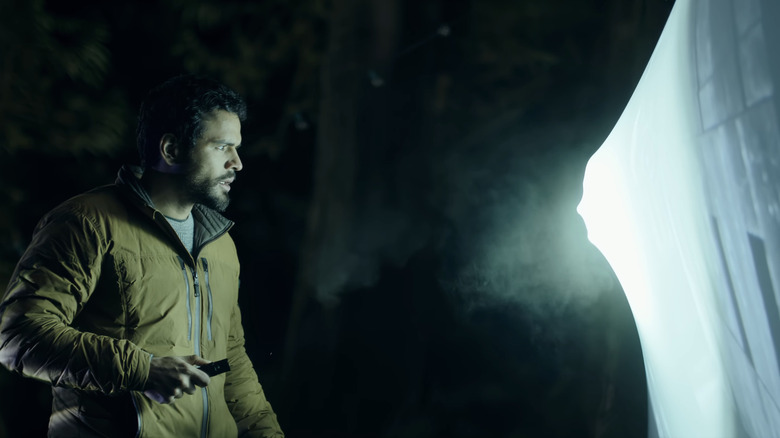
While André Øvredal claimed that the most important consideration is "deciding where to put the camera," it seems he's almost as concerned with ensuring everything is lit legibly. In discussing how he combats overly dark images, the director said:
"We have to have something that's a key, that has an exposure level that is normal somewhere in the frame at least. Especially like in the ending with, there is the passenger in the car. It's got to be dark in there. There is no light. There has to be dark, but we have to have some light source that is normal exposed, that is where the eye will land, and then it will figure out the rest, in a way."
The "Passenger" trailer, with its actually scary jump-scare, certainly was a dim affair, but you can get a sense of what Øvredal was talking about from the shots it comprises. The film follows a couple, played by Jacob Scipio ("Bad Boys: Ride or Die") and Lou Llobell ("Foundation"), who set out on a road trip, only to encounter a fatal traffic accident. After witnessing the grim tableau, the pair find themselves stalked by an evil entity known as Passenger, who, evidently, nobody can outrun.
With plenty of night driving scenes, the filmmakers were always going to have to be clever about making things legible while maintaining the all-important sense of dread. Scenes from the trailer in which characters are lit by headlights or the glow of a dashboard seem to be Øvredal's attempt to do so. Still, the trailer doesn't seem to represent the great brightening of cinema you might expect given the director's comments.
More directors should shed light on the movie darkness problem
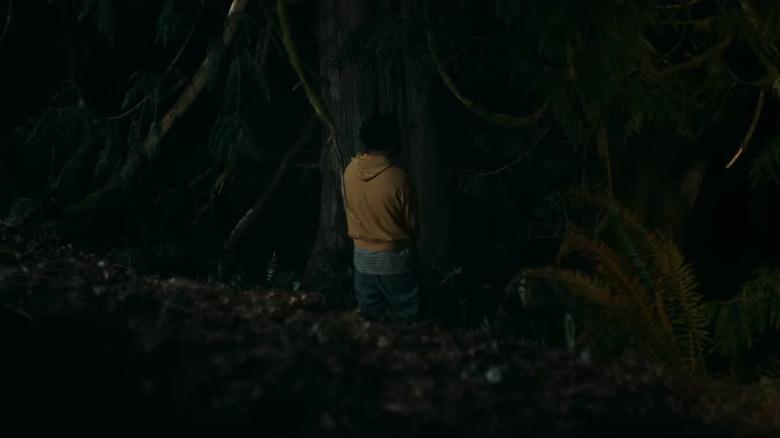
In his comments to /Film, André Øvredal explained how he and his crew would spend time "talking a lot about what kind of colors the light should have, where is the key light source, and how do we use practicals? Practicals was a big issue here." You can understand why practicals might be an issue on desolate stretches of road without streetlights, but it seems Øvredal figured out ways to make it work, even if the trailer isn't exactly the most obviously intelligible collection of shots you'll ever see.
That brings up a point well worth bringing up here: trailer color grades do not represent the final look of a movie. In fact, there will almost certainly be entirely different colorists working on the trailer and the final movie, and that can have a significant impact on how Øvredal and his cinematographer, Federico Verardi, see their images. Similarly, color grading in general will greatly influence how the "Passenger" cinematography looks, regardless of the steps the filmmakers took to keep things properly exposed.
Meanwhile, Øvredal is far from the only person to bring up this issue. For example, the "Harry Potter" TV series has a major desaturation problem and studies, such as one from i-Perception (via the National Library of Medicine) prove that "the mean luminance value of frames across the length of a film has decreased over time." The reasons for this are numerous and complex, and for the time being, it doesn't look as though films — especially horror movies — are going to suddenly brighten up.
Still, it's encouraging to hear directors addressing the issue, and if you're intrigued as to whether Øvredal managed to overcome it, you can check out "Passengers" in theaters on May 22, 2026.