

Dr. Al-Hashimi's The Pitt Season 2 Secret Is Personal For Some Viewers — Including Me
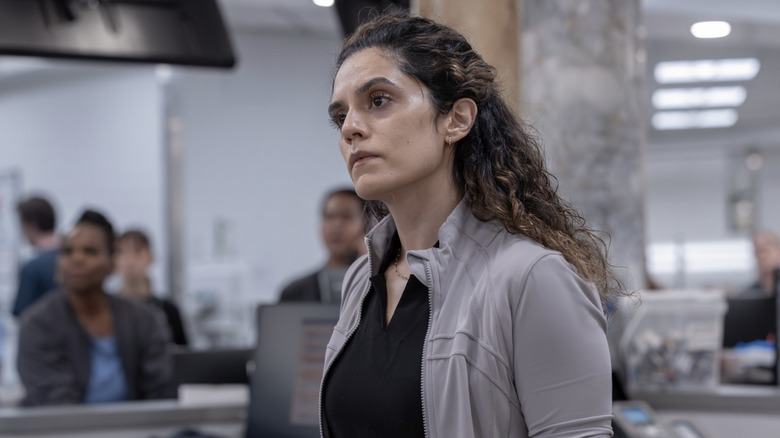
Don't head into your emergency department shift if you haven't watched "9:00 P.M.," the season 2 finale of "The Pitt." Massive spoilers ahead.
In the final moments of the penultimate episode of "The Pitt" season 2, we learn something critical about Sepideh Moafi's Dr. Baran Al-Hashimi. A talented and excellent physician, Dr. Al-Hashimi is set to take over the Pittsburgh Trauma Medical Center's emergency department while Dr. Michael "Robby" Robinavitch (Noah Wyle) is away on a three month sabbatical. However, it turns out she's suffered from sporadic seizure episodes since she was a small child in Iran after developing a case of viral meningitis.
Though her episodes are largely controlled by medication, and she works closely with her neurologist to monitor her situation, Al-Hashimi privately admits to Robby in the season 2 finale, "9:00 P.M.," that she's had not one but two seizures during their shift that day. Her seizures are characterized as focal impaired awareness seizures or "FIAS," which make the person experiencing them simply look like they're distracted or disassociating. "They tried every anti-seizure medication, but I still had episodes every few months or so," she explains. "Nobody's ever noticed before. They just think I'm thoughtful."
When Al-Hashimi told Robby this, I felt my heart drop — because I have a history with seizures, and I understand her terror and helplessness so well.
Unlike Al-Hashimi, my seizure history doesn't have anything to do with a previous illness, and it's seemingly far less frequent and consistent; over the course of my 35 years of being alive, I've had three seizure incidents. But because their root cause is ultimately murky, I live with a low-simmering fear that it could happen again at any time and derail my current life. Watching Al-Hashimi grapple with that very thought was gutting ... and familiar.
Dr. Al-Hashimi's pain and uncertainty about her seizures on The Pitt feel all too familiar to me
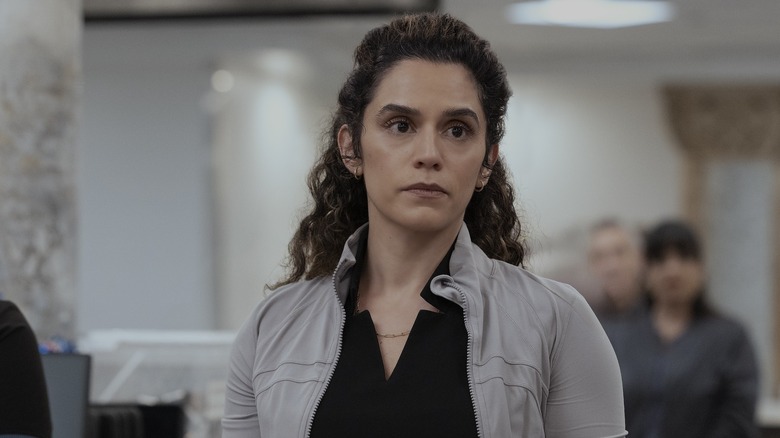
When I was 13 in 2004, I got to go on the vacation of a lifetime to Australia. There, while visiting friends and family on the west coast in Perth, I experienced my first tonic-clonic seizure (formerly known as grand mal seizures), which are the kind usually depicted on television involving loss of consciousness and twitching. I was subsequently seen at the world-famous Children's Hospital of Philadelphia, where a kindly neurologist concluded that the seizure was caused by an influx of hormones, dehydration, and sleep deprivation due to jet lag. Then, when I was 16, I collapsed in my high school's computer lab and had a second tonic-clonic seizure. (For the record, I don't recommend being wheeled out of your high school on a gurney in front of literally everybody, especially if you're already unpopular.) The second neurologist's diagnosis was similar: I was prepping for the SATs and burning the candle at both ends, so I needed to make sure I stayed hydrated, well-rested, and well-fed.
I did that ... until December of 2021, where I remember walking down the street with my mom during my last-ever week living in Paris as a graduate student, and then nothing. When I woke up, I was able to step into the ambulance myself. For that reason, the third neurologist thought that it was an absence seizure (more similar to Al-Hashimi's seizures) or perhaps convulsive syncope, which is where a person faints and twitches in a manner that resembles a seizure — though once again, it was stress-related. Whatever the case, it shook me to my very core. Al-Hashimi's story is different, yes ... but I understand her pain, fear, and trepidation about what's next.
Dr. Al-Hashimi's medical emergency is personal to me, but it's also universal
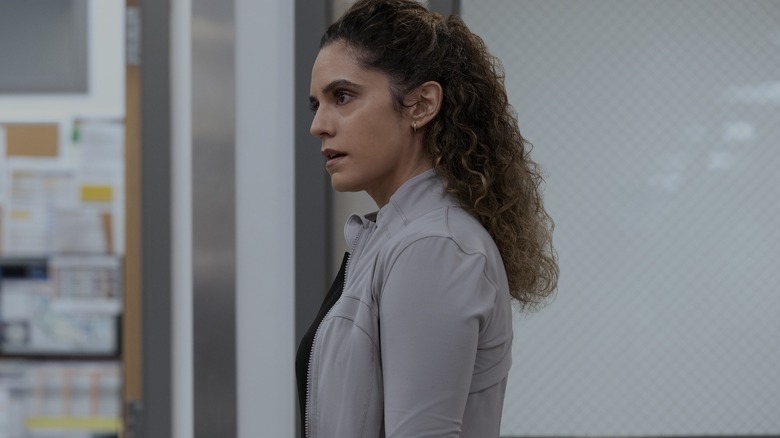
Dr. Al-Hashimi's seizure triggers, as she informs Robby, also felt distressingly familiar to me; as she says to him, "But I had two today. I don't know why. It could be sleep deprivation, new jobs, stress; I haven't had to deal with peds cases since Afghanistan." (Al-Hashimi mentions, earlier in season 2, that she worked at the Dasht-e-Barchi Hospital in Kabul in 2020 when a terrorist attack targeted a maternity ward there.) Obviously, I have a particular connection to Al-Hashimi's experience here, despite our vastly different lives; ever since 2021 reminded me that I'm all too fallible, I've worked even harder than I used to so that I don't let my brain hit its apparent breaking point. I let my guard down and won't make that mistake again.
Pull back from this specific ailment, though, and this is a universal feeling. Anyone who's dealt with any health setback understands the lingering fear that said setback will recur, rearing its terrible head once again to derail your life. "The Pitt" is a series that strives for medical accuracy, and in this particular storyline, I think it succeeded mightily — because physicians are humans, not superheroes, and they suffer from medical emergencies too. Maybe this is something that will help the average American better understand how those in the medical industry deal with their own issues, but at the end of the day, it's a poignant story for Al-Hashimi and one that I think will feel relatable to far too many people.
"The Pitt" isn't supposed to be an easy show. Still, with storylines like these, it's proven why it's great. You can stream "The Pitt" on HBO Max.