

Star Wars: Maul – Shadow Lord Borrows From A Controversial Prequel Storyline (And It Works)
Even the most maligned blockbusters eventually get their redemption tour. The "Star Wars" prequels have enjoyed a resurgence over the last decade, with those who saw them when they were younger now fervently championing George Lucas' long-maligned movies. Whether it's the incredible score by John Williams, the stunning action choreography and stunt work, or the complex world-building, the prequel trilogy is no longer the punching bag it once was. (It also helps that these films are politically prescient in ways even Lucas didn't expect.)
If that wasn't enough, the "Star Wars" franchise itself has spent years mining the prequel trilogy for inspiration and nostalgia ever since it began producing live-action streaming series. The shows "Obi-Wan Kenobi" and "Ahsoka" both have flashbacks to the prequel era, while "The Mandalorian" features appearances by Clone War-era battle droids (which it treats with reverence). One could even fairly argue that the prequels have influenced the "Star Wars" property more lately than the original trilogy.
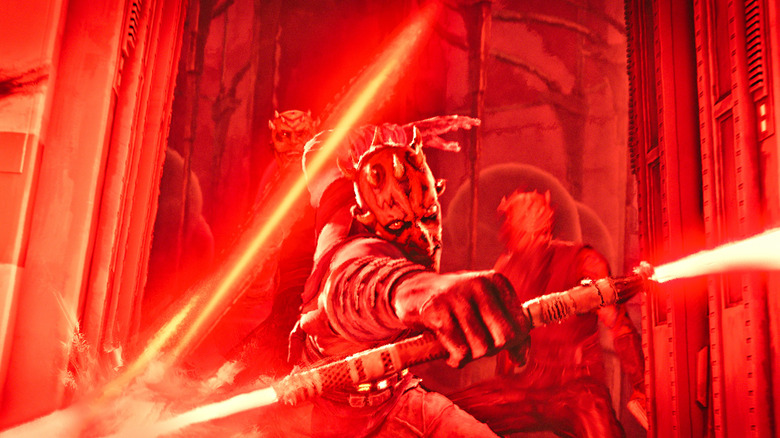
Granted, it's the more beloved aspects of the prequels that have primarily shaped the franchise up to now, but that's not the case with "Star Wars: Maul — Shadow Lord." Instead, the animated series weaponizes nostalgia for the prequels by focusing on Maul (voiced by Sam Witwer), a character who was to the prequels what Boba Fett was to the original trilogy (read: more of a cool concept than a fleshed-out individual). Except, he isn't the only focus here, as "Shadow Lord" is additionally a story about a detective who finds himself way in over his head after crossing paths with Maul himself.
More to the point, the noir influences on "Maul — Shadow Lord" recall a controversial storyline from the prequels — namely, that time Ewan McGregor's Obi-Wan played detective in "Star Wars: Episode II — Attack of the Clones."
Star Wars goes noir again with Maul – Shadow Lord
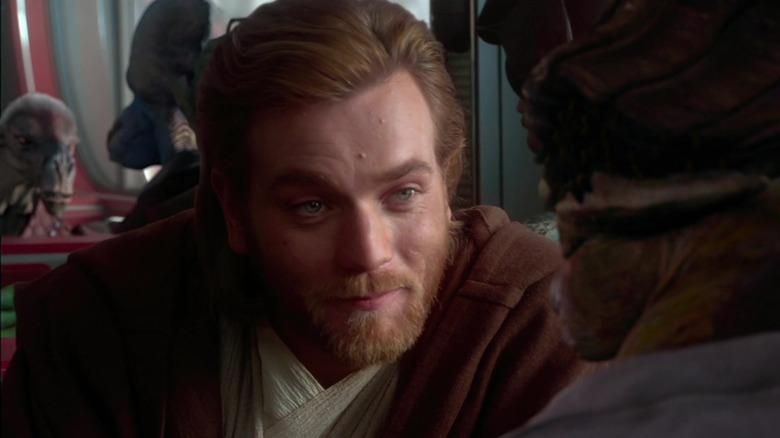
"Attack of the Clones" isn't as bad as you remember, and that's primarily thanks to its detective noir subplot. Overall, George Lucas devotes roughly a third of the movie to following Obi-Wan as he investigates the attempted assassination of Naboo Senator Padmé Amidala (Natalie Portman), only to stumble upon a vast conspiracy involving a clone army. In doing so, he winds up exploring the shadier side of Coruscant, interrogating suspects, and even chilling at a 1950s-style diner owned by everyone's favorite Besalisk prospector Dexter Jettster. Who could forget Obi's old buddy Dex?
Sure, this subplot is silly, overly long, and convoluted. (Sifo-Dyas and his role in the creation of the clone army is barely explained in this movie, much less in the greater canon.) Still, it's a fun watch that's essential to the mythology of the larger "Star Wars" universe.
"Maul — Shadow Lord" is now echoing this polarizing storyline by spending a significant amount of its first two episodes, well, operating as a crime drama centered on Brander Lawson (Wagner Moura). A police detective on the planet Janix, Lawson is investigating a heist on a local mobster's vault with his trusty police droid partner, Two-Boots (Richard Ayoade), when the show begins.
From there, "Maul — Shadow Lord" proceeds to include all the classic tropes associated with the crime genre. Lawson himself is an archetypical hard-boiled detective who bends the rules (even though his partner is a stickler for them) and has a difficult home life, being seemingly divorced. And though he may not have a friend who owns a slimy mid-20th century-styled diner, he does have a femme fatale informant.
Most importantly, like any good noir private eye, Lawson goes rogue and defies the authorities when he must.
The Empire is the real enemy in Maul – Shadow Lord
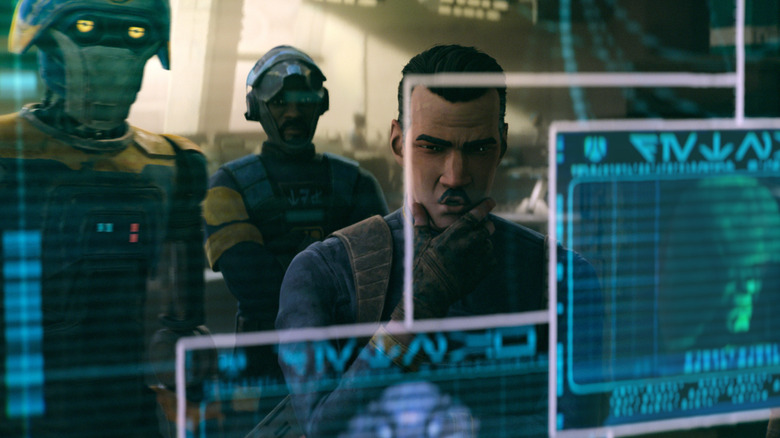
"Maul – Shadow Lord" seems to be setting up a story in the vein of "The Untouchables," with Brander Lawson serving as the Eliot Ness to Maul's Al Capone. But more than that, the series' premiere makes it clear that Lawson, despite working for the authorities, absolutely does not trust the Empire.
As soon as he discovers the Empire is interested in Maul, Lawson decides to continue investigating the former Sith lord on his own. Why? Because he doesn't want the Imperials coming in and seizing control of Janix, much like they have elsewhere in the galaxy. The result is a subplot that has so far managed to bring some fresh tried-and-true genre conventions into the "Star Wars" franchise without it feeling too forced or contrived. Indeed, like any decent detective tale, Lawson's story is all about a detective having to reckon with the oppressive authoritarian regime and otherwise unjust system that they are duty-bound to serve.
It's probably a little too early to say if "Maul — Shadow Lord" will delve fully into conspiracy territory the way "Attack of the Clones" does, but just like that movie, it's clear that Lawson's investigation will lead to one singular enemy: Darth Sidious. And seeing as Obi-Wan never got to the bottom of his own rabbit hole and connected all the dots, it's unlikely a small-town cop like Lawson will discover the full extent of Maul's role in the Empire's rise to power, either. Still, at least we have this fun detective to keep us entertained as we wait to see what, exactly, this series has to say about Maul that "Star Wars" fans didn't already know.
"Star Wars: Maul — Shadow Lord" is now streaming on Disney+.