

Star Wars: Maul Brings Back The Shadow Collective – Here's Everything You Need To Know
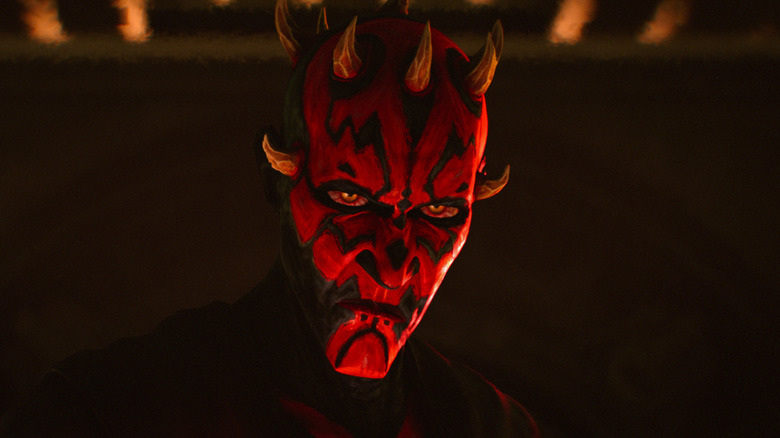
This article contains spoilers for "Star Wars: Maul — Shadow Lord" episodes 1 and 2, "The Dark Revenge" and "Sinister Schemes."
The surprisingly dark "Star Wars: Maul — Shadow Lord" picks up in the months after the Empire has taken over the galaxy. Maul has recently been freed from his captivity at the hands of Ahsoka Tano, and his Shadow Collective has been broken. Now, he seeks revenge for those who didn't come to his aid in his darkest hour.
Through these episodes, this Shadow Collective is spoken of in hushed whispers as though everyone who should know who is involved and what the group does, but many characters don't. With the expansive nature of "Star Wars" being what it is, many audience members may not know what it is, either, just like that viewer settling into the theater in 1977 and hearing about the Clone Wars for the first time.
Below, we've collected all of the essential information about what the Shadow Collective is, its purpose, and how it might affect the rest of the show.
What happened to Maul after The Phantom Menace?
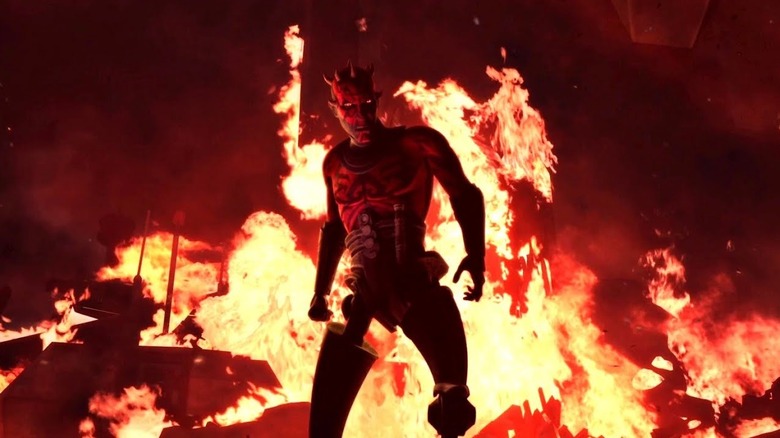
After Maul's bisection at the hands of Obi-Wan Kenobi in "The Phantom Menace" in one of the best lightsaber fights of all time, many viewers thought that was the end of Maul's story.
George Lucas had other plans.
When sketching out the story of "Star Wars: The Clone Wars," the animated series that Lucas oversaw, he saw an opening to bring Maul back to the story. Clinging to the dark side, his hatred, and his need for vengeance, Maul lived alone on the junk world of Lotho Minor for years until his brother, Savage Opress, plucked him from his ranting exile and brought him back to the galaxy. Once his mind was healed, Maul sought any way to once again become a player on a galactic scale, not just to seek his revenge on Kenobi for so grievously wounding him, but to get revenge against his former master for abandoning him.
To do this, he first sought to take over Hondo Ohnaka's pirate gang, but that plan backfired spectacularly. So he turned to the world of more organized mercenaries and criminals to create something that would be known as the Shadow Collective.
The formation and dissolution of the Shadow Collective
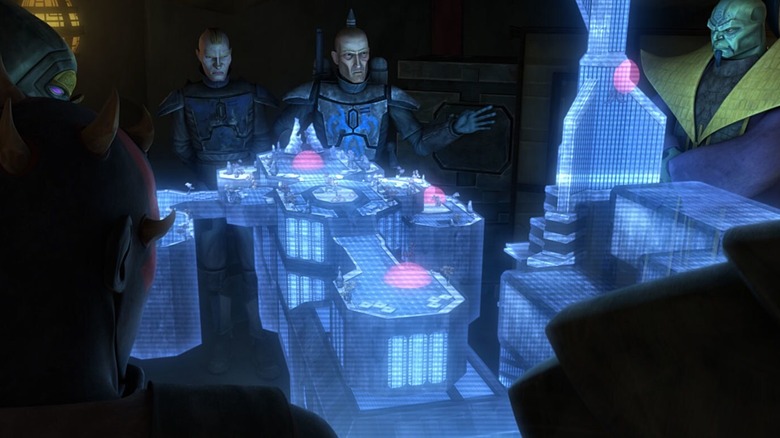
Maul found an alliance of convenience with Death Watch, led by Pre Vizsla, an offshoot sect of Mandalorians dissatisfied with the pacifist leadership of Mandalore. Promising to help them take back their homeworld, he used the army Death Watch provided him to subjugate the various factions of the galaxy's underworld. Black Sun, Crimson Dawn, the Hutt crime families, the Pyke Syndicate — Maul was able to bring them all (and more) together under the umbrella of "The Shadow Collective." This allowed him to take over Mandalore and Death Watch, challenging Pre Vizsla for his place of power.
Maul became the de facto ruler of Mandalore until he was captured by his former master, who killed his brother. This was when the Shadow Collective began to show the first signs of breaking up, and he was abandoned by many elements of it. Working against the Sith and the Separatist alliance was not typically seen as a wise move. Maul's Mandalorian allies (including Rook Kast, who is seen on the show), remained faithful, rescued him, and brought him back to Mandalore. That's when Bo-Katan arrived, and with the help of Ahsoka Tano, laid siege to Mandalore and captured Maul on the eve of the great Jedi Purge.
As dramatized in the series finale of "Star Wars: The Clone Wars," Maul was able to escape, but his Shadow Collective was broken, and he had very few places to turn. Thanks to "Maul — Shadow Lord," we'll finally be able to see the results of his escape and fill in some spots on the character's surprisingly elaborate timeline.
The first two episodes of "Maul — Shadow Lord" are out now on Disney+. Episodes come out two at a time weekly until the May 4, 2026 finale episodes.