

How Star Trek's William Shatner Feels About Starfleet Academy's Sudden Ending
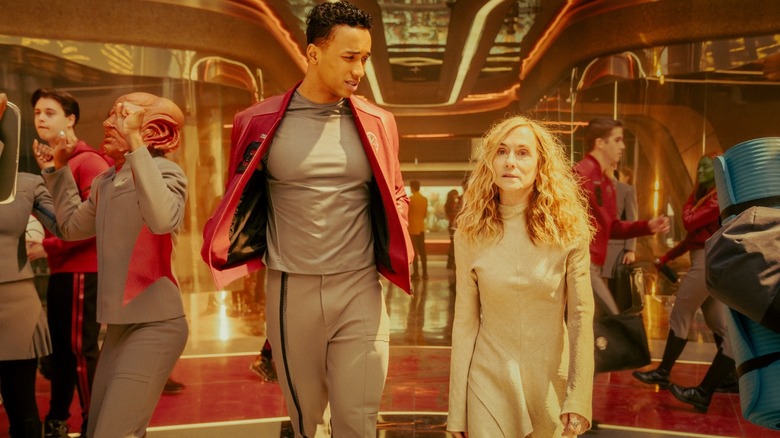
Trekkies got two pieces of big news recently, one positive and one negative. For the positive: Actor William Shatner, who played James T. Kirk on "Star Trek: The Original Series," turned 95 on March 22, 2026, and Trekkies everywhere were able to internally celebrate his birthday. For the negative: It's been announced that "Star Trek: Starfleet Academy" will end after its second season wraps up.
"Starfleet Academy" was, by this writer's estimation, an incredibly promising "Star Trek" series in its newly concluded first season, complete with a good premise and good characters. Season 1 unfolds in the 32nd century after a galaxy-wide cataclysm called the Burn has wiped out all active starships and killed millions across the "Star Trek" universe. Most worlds have retreated into isolationism, while the Federation has shrunk and gone into hiding. So, the titular school reopens as a way to announce that peace and diplomacy are now options again. The result is a "Star Trek" show about reconstruction, as told from the POV of teen Federation cadets who spend their days studying science, art, theater, and each other. It's a very youthful series.
But something about the show has rubbed people the wrong way. "Starfleet Academy" season 1 was notoriously review-bombed by whiners who hate its progressive ideas, queer representation, etc. It wasn't bigoted enough for a contingent of perpetually-online individuals. Indeed, the racist cadaver Stephen Miller once whined that the "Star Trek" property needs to be saved from "Starfleet Academy," insisting that Shatner take creative control of the franchise.
Shatner, however, believes that "Starfleet Academy" ending is a tragedy, writing on Twitter/X, "It's with sorrow that I hear about the cancellation of the new 'Star Trek' series." He's further noted that the property has had to face criticism from intolerant viewers throughout its entire life.
William Shatner has greeted the cancelation of Starfleet Academy with sorrow
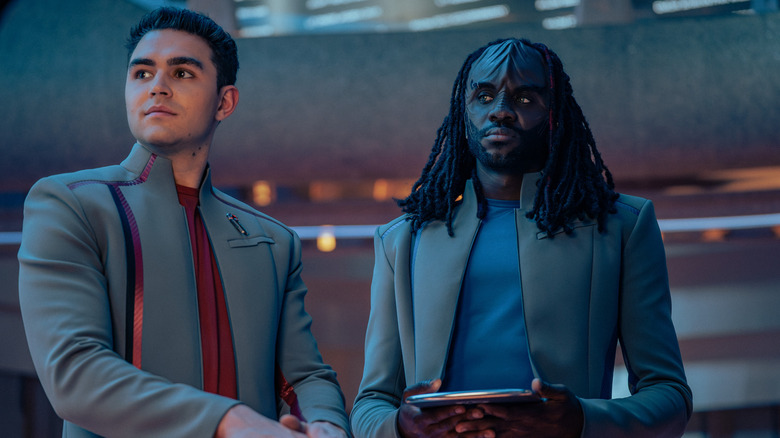
William Shatner wisely pointed out that the "Star Trek" franchise isn't just about its fictional science (although that is, of course, an important aspect); it's also all about creator Gene Roddenberry's wish fulfillment fantasies. The property is most notable for its optimistic view of the future, imagining a time when humanity has let so of petty things like prejudice, money, and war and instead united to become a force for exploration, benevolence, and study. As Shatner put it:
"'Star Trek' exists in more than one world. It exists in the fantasy of science fiction — weird and wonderful things that play unimaginable possibilities of exploration and human endeavor. But it also exists in the fantasy of human beings, the perfection of human beings, the exploration that human beings have made since the dawn of time and the continuing exploration — physically, mentally, and morally. It's that aspect of 'Star Trek' that I've always loved, to look at something physically that doesn't exist now by these talented writers & designers but also to tackle the eternal human questions the agonies, the ecstasies."
As such, Shatner likes the notion of the "Star Trek" franchise continuing onward and repeatedly inspiring humanity. Far from being concerned with the nitty-gritty of "Starfleet Academy," the actor believes enough in the property as a whole to lament the end of its latest installment. In other posts on Twitter/X, he's similarly miffed that there are people out there who hate "Starfleet Academy" for reasons of racism and bigotry. For Shatner, though, the song has always remained the same.
The more things change, the more they stay the same when it comes to Star Trek TV shows

One of William Shatner's subsequent Twitter/X posts evokes "Plato's Stepchildren," a "Star Trek: The Original Series" episode long banned in the UK. There, Captain Kirk is psychically manipulated by a cadre of super-powered sadists into kissing his crewmate, Uhura (Nichelle Nichols), against their wills. The episode was the first time a scripted kiss between a Black woman and a white man appeared on U.S. television.
Shatner perpetuated an incorrect rumor in his post, though, writing:
"During the first airing of my 'Star Trek' series where a kiss was objectionable; many Southern stations pulled the episode & condemned the show. Using today's vernacular it would absolutely be called 'woke DEI crap' because it went against 'norms' of society for its time. Not a lot seems to have changed."
In fact, the kiss in "Plato's Stepchildren" mainly caused consternation among network executives who feared it would invite racist blowback (per NBC News).
That said, Shatner is correct. In 2026, "Plato's Stepchildren" would indeed be slammed by modern racists as being "woke DEI crap." In yet another Twitter/X post, he additionally observed that those claiming "Starfleet Academy" isn't "real 'Star Trek'" remind him of the people who said the same thing about shows like "Star Trek: The Next Generation" and "Star Trek: Enterprise" before it. "'Star Trek' is different for everyone," he continued.
Finally, Shatner confessed to having not watched "Starfleet Academy." "I've only seen the one clip with passing of the glasses that I made fun of several weeks ago," he wrote in his final Twitter/X post. It was big of him to defend a series he hadn't seen, knowing most of the discourse around it has nothing to do with its actual quality.