

5 Biggest Changes The Project Hail Mary Movie Makes From The Original Book
We may receive a commission on purchases made from links.
This article contains major spoilers for "Project Hail Mary" and the Andy Weir novel.
If you've ever looked up at the stars and wondered if there could be life out there, specifically in the form of a spidery rock creature that communicates entirely through musical notes and whistles, "Project Hail Mary" is the movie for you. Directors Phil Lord and Chris Miller have made an entire career out of turning the most unadaptable properties into critical and financial success stories. Even with the caveat of the film's reported blockbuster-sized budget, their latest collaboration keeps their creative win streak alive and well. That's sure to be a relief for moviegoers of all stripes, from cinephiles eager for the prospects of a non-franchise hit at the box office to hordes of readers out there who devoured author Andy Weir's original novel and wondered if such a quirky story could ever translate to the big screen.
The early returns seem to be overwhelmingly positive, thanks to screenwriter Drew Goddard and some seriously clever narrative choices along the way. In its totality, "Project Hail Mary" will surely go down as the most faithful adaptation anyone could've ever hoped to see. But, with that said, there are still a number of divergences from the original text worth pointing out — most of which make for a better viewing experience overall.
Wondering how the novel handled certain aspects we saw in the movie, or simply looking for a refresher on the finer details from the 2021 book? We've rounded up five of the biggest changes made from Weir's "Project Hail Mary" below. Some are minor, others are less so, but all of the following points only highlight why both versions are well worth checking out.
Project Hail Mary skips over the book's earliest flashbacks
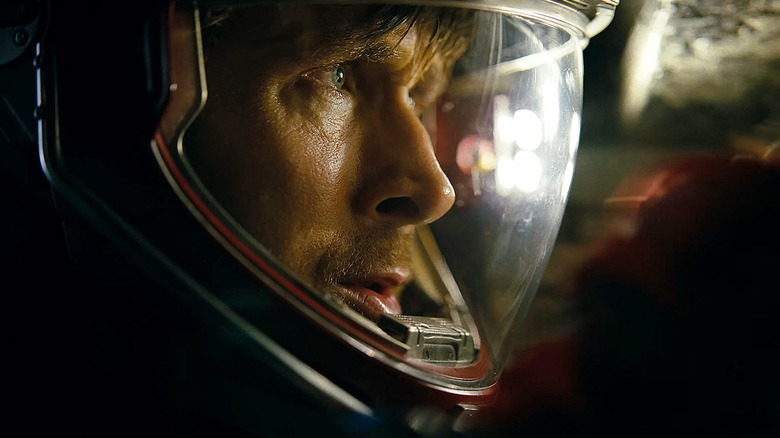
Rather than tell a conventional, chronological story, Andy Weir's "Project Hail Mary" finds a novel way (pun unfortunately intended) to kick off the action. We start out with the amnesiac Ryland Grace on a medical table with no memory of who he is or how he got there. Slowly, he puts the pieces together and figures out where on Earth – or, more accurately, in space — he actually is. Certain observations trigger memories of his past and, over the course of almost three full chapters, he finally remembers his own name, his occupation as a teacher, and the existential threat to the Sun posed by microbial organisms nicknamed "astrophage."
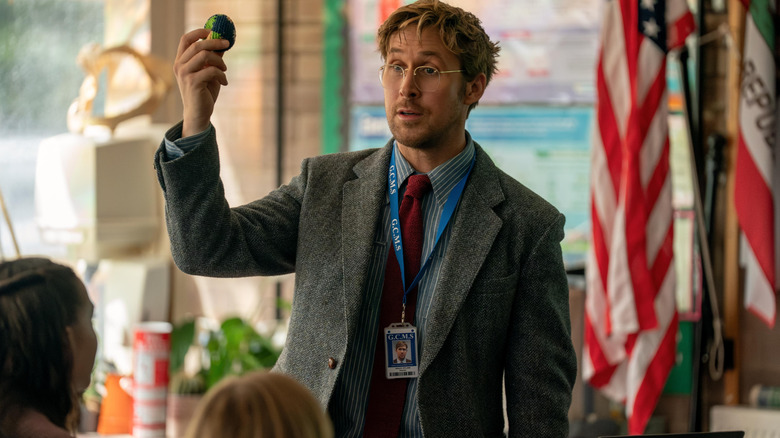
Phil Lord, Chris Miller, and Drew Goddard take a somewhat more straightforward approach. The film opens similarly enough, showing Ryan Gosling's Ryland freak out about his predicament before reverting to the flashback structure of the book. Weir carefully documents Ryland's earliest memories of the astrophage threat, first through scientific papers observing the unexplained phenomena and later through news reports confirming that alien microbes are causing the sun to die. In the movie, however, the flashbacks only begin with Ryland teaching his class of elementary students about the astrophage and, by extension, filling viewers in on all the necessary exposition. Soon after, Sandra Hüller's project leader Eva Stratt arrives and recruits him on her mission, thus setting the plot into motion.
While readers may be disappointed to miss out on the gritty details of exactly how Ryland and the world at large first discovered what they're up against, the filmmakers opt for a more streamlined way to accomplish the same task. Thankfully, Weir seems to approve. As for the rest of us, it's hard to argue with the results.
Project Hail Mary doesn't (fully) science the s*** out of it
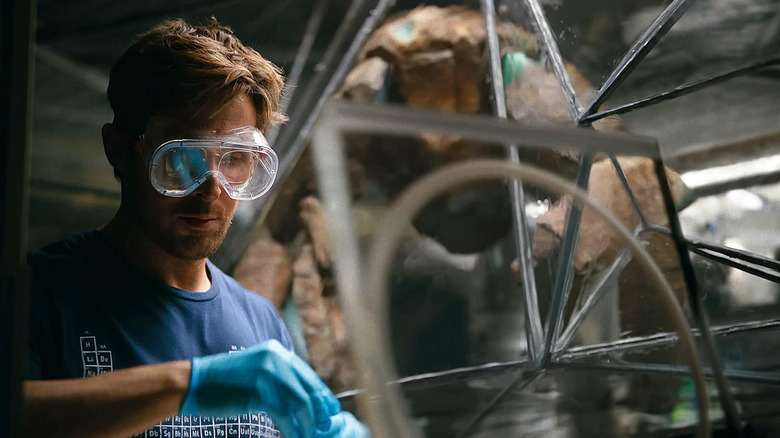
Those who read a different Andy Weir story and watched Ridley Scott's adaptation of "The Martian" know exactly how nerdy these things can get. After all, the most enduring quote splashed all over that film's marketing was Matt Damon's marooned astronaut Mark Watney excitedly yelling about how he has to "science the s*** out of this" situation in order to survive and make it back home from Mars. "Project Hail Mary" isn't exactly reinventing the wheel in this regard, similarly following another stranded astronaut who needs to embrace the "science" in "science fiction" in order to accomplish his own mission.
But, as this the case with any such adaptation, viewers will inevitably find that the nerdiest minutiae of "Project Hail Mary" has been sanded down a bit for mainstream audiences. In the grand scheme of things, complaining that a blockbuster movie doesn't confuse or bore your average moviegoer is probably the nitpickiest of nitpicks. But for those of us who gravitate (yes, that's another pun) towards such things? Well, there's a certain amount of enjoyment to be found in reading Ryland figure out he's not on Earth by calculating the exact gravity in his spaceship down to the exact meter per second. Or, say, in the granular steps of measuring sunspots traveling across a star in order to realize that he's actually in another solar system altogether, not our own.
Obviously, a movie can't quite get away with grinding the momentum and pacing to a full stop in order to linger on these (relatively) unimportant details. And, for what it's worth, the adaptation still gets down and nerdy where it matters later on in the story. Sadly, though, "Project Hail Mary" doesn't fully let its sci-fi flag fly.
Project Hail Mary changes Ryland Grace and Eva Stratt's working relationship into an implied romance
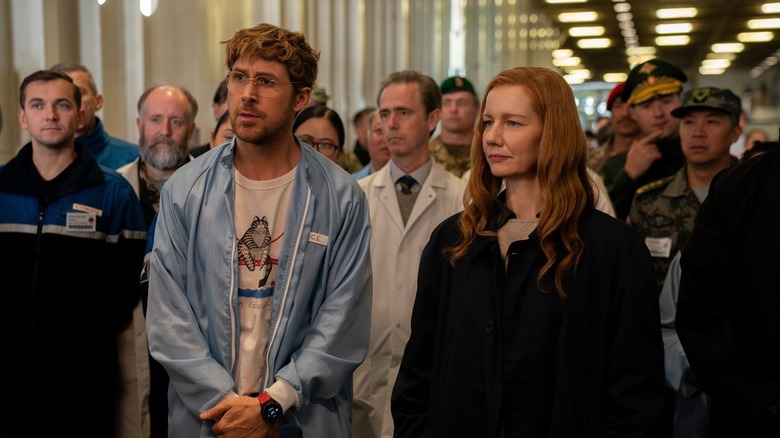
Look, it's only natural: If you're going to cast actors as charming, likeable, and talented as Ryan Gosling and Sandra Hüller, you might as well lean into those traits rather than swerve away. I know, purists typically want an adaptation to be a direct 1:1 copy of the original story they fell in love with in the first place. However, the realities of bringing a narrative from one medium into another requires a certain amount of spontaneity.
One such example in "Project Hail Mary" revolves around the characters of Ryland Grace and Eva Stratt. While nothing more than an efficient (though occasionally bristly) working relationship in Andy Weir's novel, the film version opts for something with slightly more sparks to it. The earliest hints of a little something something cooking between the pair occur fairly early on, as the camera focuses on a few lingering stares that each character subtly gives the other. This further builds during a karaoke session aboard their research ship, in which Hüller is wisely allowed to show off her pipes as Ryland gazes at her with that perfectly goofy smile. The two also engage in a few secluded conversations away from anyone else, talking about anything from the science mission to singing to the existence of God. Before they even know it, the discerning viewer might find themselves rooting for a romantic smooch or two.
Ryland and Eva's relationship doesn't progress that far, of course. (Forcibly tranquilizing someone and tossing them onto a suicide mission against their will would likely have that effect.) But this extra layer adds all sorts of dimension to their dynamic ... even if it's not strictly "accurate" to the book.
Rocky's injuries late in Project Hail Mary aren't as significant as they are in the book
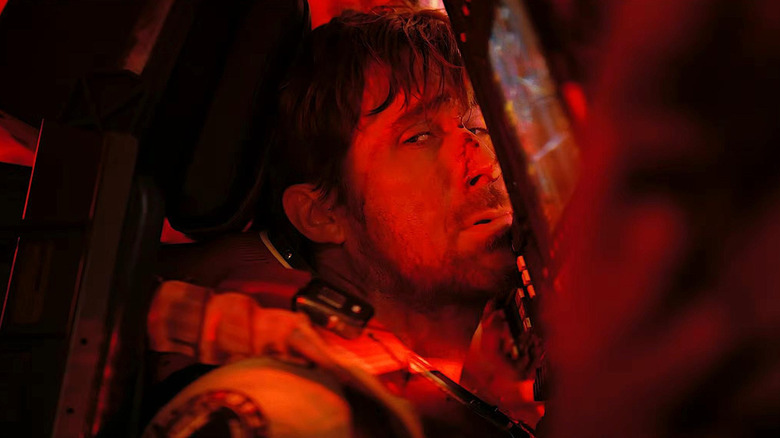
If you've read an Andy Weir novel before (or, you know, watched more than three movies in your life), you know that the good times can't go on for long before things have to go horribly wrong. This harrowing setback arrives later in "Project Hail Mary," when Ryland and Rocky team up aboard the human spaceship to scoop up samples of the natural astrophage predator (which Ryland coins as "taumoeba") from the atmosphere of a nearby planet.
Naturally, things don't go according to plan. Ryland has to go out on a space walk in order to physically retrieve the probe, which exposes him to every possible kind of danger amid the most chaotic environment imaginable. Then, just as he (barely) manages to hold onto his precious cargo, the ship springs a leak and sends the two careening out into space. Only some quick thinking and a lot of luck prevents all-out disaster, but the emergency takes a toll on both our heroes.
In both the film and book, Rocky breaches the containment sphere protecting him from the toxic human atmosphere to rescue Ryland, but the aftermath differs significantly. In the adaptation, Rocky simply falls asleep and takes time to recover before finally waking up again. In the original story, Weir heightens Rocky's dire condition and has Ryland play doctor (on an alien physiology, no less) to help save his best bud. Some MacGyver-like improvisation, plenty of scientific problem-solving, and a few days later, Rocky wakes up ... and reveals that Ryland's desperate actions only made things worse for him. It's a hilarious rug-pull of a moment for our aspiring hero, but one can understand why the filmmakers would rather avoid undercutting this heartfelt moment.
Project Hail Mary cuts one big Earth scene, but adds another at the end
The art of adaptation means knowing when to pare things back from the source material and when to add onto it. "Project Hail Mary" mostly hews close to the structure, tone, and narrative beats of the book. But, occasionally, it takes matters into its own hands (if only a film, you know, had hands).
The first notable instance is in regards to a particularly shocking subplot found in the book, but left out entirely in the movie. In Chapter 14, Andy Weir introduces a climatologist named Dr. François
Leclerc recruited by Eva Stratt for the Hail Mary mission. As the astrophage continue to eat away at the sun, lowering its light and heat output on the surface of the planet, Leclerc explains humanity is in for famine, crop failures, the extinctions of entire species of animals and plants, extreme weather ... and a ticking clock of 19 years until half the world's population winds up dead. The only course of action to mitigate global cooling and give humanity enough time to survive? A nuclear strike on Antarctica, which would release enough methane gas into the atmosphere to warm the planet up again.
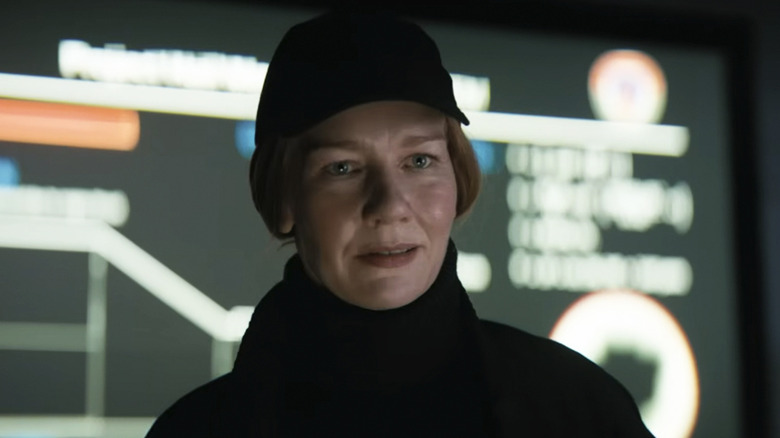
Though the movie version of "Project Hail Mary" steers well clear of this, it at least brings the action back to Earth at the very end. In the novel, we never get to see Stratt's reaction to Ryland saving the world. In fact, they part on much poorer terms, with Stratt depicted as much more of a heartless monster. Here, she's given one last moment where she recognizes Ryland's sacrifice and prepares to use his data (and taumoeba) to save the Sun.
"Project Hail Mary" is now playing in theaters, or you can buy the book here.