

Dune: Part Three Is A Different Genre Than The First Two Movies, According To Denis Villeneuve
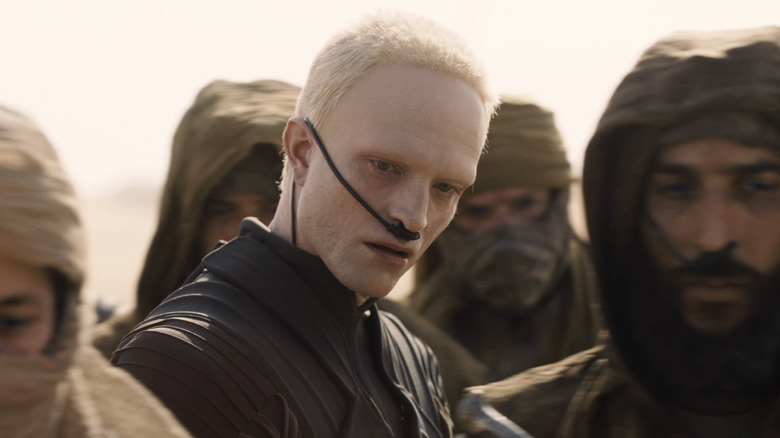
It's time to let the sand flow and gear up for an epic conclusion with Denis Villeneuve's highly anticipated "Dune: Part Three," which dropped its first trailer today. On March 16, 2026, we got an exclusive first-look image of Timothée Chalamet's Paul Atreides, along with a string of close-up character posters courtesy of Warner Bros. We can expect "Dune: Part Three" — which is adapting the events of Frank Herbert's "Dune Messiah" — to veer into completely unexpected directions than the previous entries, as this part of the story is more somber and philosophical in tone. In the "Dune: Part Three" trailer premiere event attended by /Film, Villeneuve explained how this concluding tale will be different from the first two films, along with the challenges of approaching a genre classic with "a critical eye":
"It's a very different movie from the first ones. I said to myself, 'It's a good idea to come back to this world, not by nostalgia, but by urgency, and to go there with a critical eye and the idea not to be self-indulgent.' And I said to my team that it will be a very different film. Very different. A 'Dune' movie, but with a different tone, with a different rhythm, with a different pace. And if the first movie was more of a contemplation, like a movie [about] a boy exploring a new world, and the second one being a war movie, this one is a thriller. It's more action-packed, and more tense, more muscular than two others, I would say."
It makes sense for the adaptation of "Dune Messiah" to be meatier, as it will be delving into the last leg of Paul's awakening as "messiah," and the repercussions that this term will have across the Known Universe in the "Dune" films.
The tonal shift in Villeneuve's Dune: Part Three is partly due to a massive time-skip
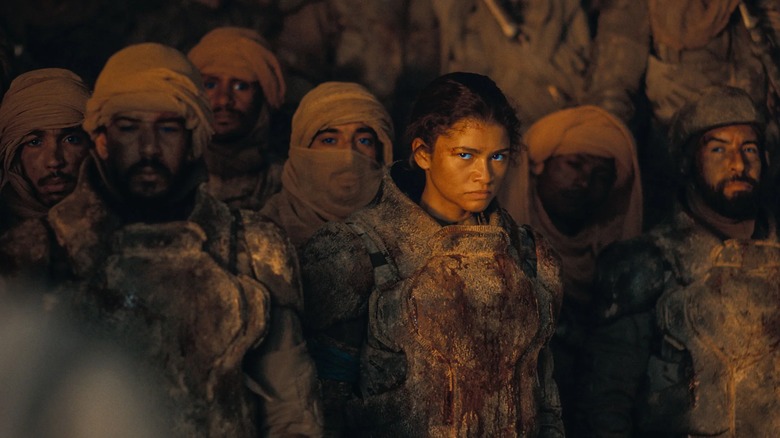
As a refresher, "Dune: Part Two" ends with Paul declaring all-out war after seizing the Imperial Throne, which shatters the status quo with the Fremen's overwhelming support. The events of Herbert's "Dune Messiah" take place roughly 12 years after the conclusion of "Dune," and hone in on the aftermath of Paul's reign as Emperor and the utter devastation that his holy war has brought about. Villeneuve's time-skip differs by a few years for the purpose of slotting events into his version of the saga, but "Dune: Part Three" makes use of this trope to underscore how things have changed drastically:
"It's a movie that takes place many years after the two first films. A bit like the book, 'Dune Messiah', gives a new sight on what happened to Paul Atreides. So there's a time gap, 17 years, where we see Paul dealing with the consequences of having too much power and him trying to figure out how to get out of this cycle of violence. And of course, he's an emperor who can see the future, so he's kind of invincible. And we will follow people trying to overthrow him."
Despite this change in narrative perspective, Villeneuve maintains that "Dune: Part Three" is still a love story. "The heartbeat of the film is still the relationship between Paul and [Zendaya's] Chani," the director stated, setting up expectations for an intensely emotional conclusion. This is great news, as "Part Three" already has a huge advantage over the "Dune Messiah" book, given how Villeneuve is shaping up his "Dune" as a more tightly-knit tragedy that improves upon some of the flaws in Herbert's series.
"Dune: Part Three" will release in theaters on December 18, 2026.