

How To Make A Killing Review: Glen Powell Is Perfectly Cast In John Patton Ford's Sharp Satire
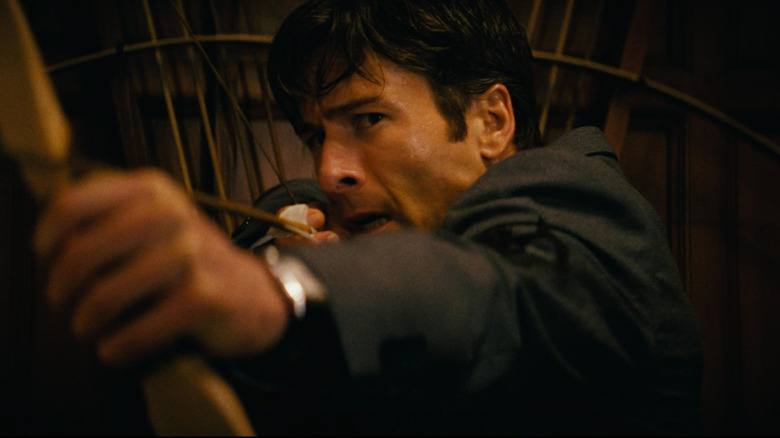
There used to be something called the "American dream," an ideal status of prosperity and comfort that every citizen of the United States aspired to. The problem is that, once upon a time, the American dream felt somewhat achievable. It used to be possible for gainfully employed people to afford a small or modestly-sized home, a car or two, leftover funds for leisure and hobbies, and so on. In 2026, folks in the millennial generation and below have to face the harsh reality that they may not be able to obtain any of these things during their lifetime. However, the American dream still continues to burn brightly, only now it doesn't beckon with the promise of reward for hard work. Instead, it seduces with the promise of outrageous reward for selfishness and vanity. Whether through social media notoriety or climbing aboard the shoulders of your wealthy ancestors, the new American dream demands getting ahead at all costs.
It's this theme which writer/director John Patton Ford is taking sharp aim at in his satire "How to Make a Killing." To do it, Ford has made the ingenious choice to make use of one of the best black comedies ever made, 1949's "Kind Hearts and Coronets," an adaptation of the novel "Israel Rank: The Autobiography of a Criminal" by Roy Horniman. The source novel and '49 film were set in and around the Edwardian era of English history, and told the story of a man working his way through the class system via murdering his relatives. "How to Make a Killing" transposes the major beats of the story to modern day New York City, and in doing so, makes a fantastic observation about the realities of the wealth disparity and the class system we're supposed to not have in the US.
How to Make a Killing is a showcase for its ensemble cast
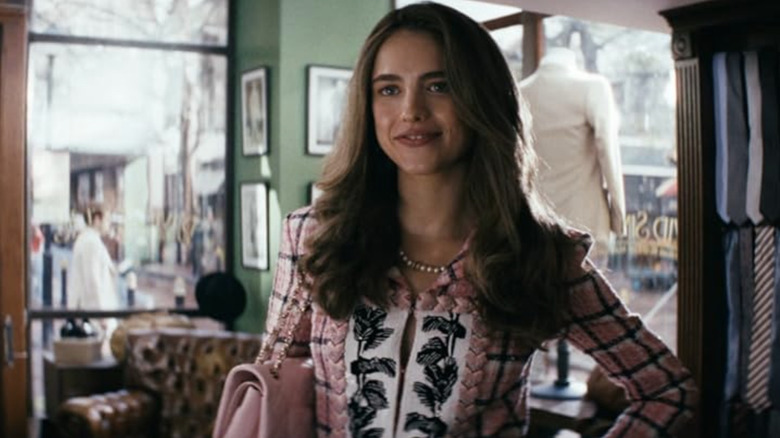
"How to Make a Killing" stars Glen Powell as Becket Redfellow, a young man whose mother, Mary (Nell Williams), was one of the heirs to her Long Island family's fortune until her falling in love with a musician and having Becket led to her being disowned by the ruthless matriarch of the Redfellow family, Whitelaw (Ed Harris). After Mary raises Becket in high society fashion (albeit in suburban New Jersey) and then dies from an illness (which her rich family does not lift a finger to help with), Becket vows revenge. He eventually seizes an opportunity when an old crush from his school days, Julia (Margaret Qualley), offhandedly gives him the idea that he could inherit the family fortune if he ensured that the rest of his relatives were bumped off. Thus begins Becket's career as a secret, highly motivated serial killer with a specific hit list, all while he rises through the ranks of the Redfellow family's investment firm due to nepotism.
The original "Kind Hearts and Coronets" made a show out of Alec Guinness playing most of the snooty murder victims, something which Ford doesn't attempt to emulate. Instead, he's stacked his film with a fabulous ensemble of actors. In addition to the aforementioned names, there's also Jessica Henwick as Becket's school teacher love interest, Bill Camp as Becket's kindly uncle, and Zach Woods, Topher Grace, Bianca Amato, Raff Law, and Sean Cameron Michael as his other Redfellow relatives. As excellent as their contributions are, there's no question that the film belongs to Powell, and rightfully so. The actor has a knack for playing cocky pretty boys as well as men with a chip on their shoulder, and Becket is both. Powell understands he's key to the film's tone and satire, and plays it just right.
The film is more of a wry grin than a laugh riot
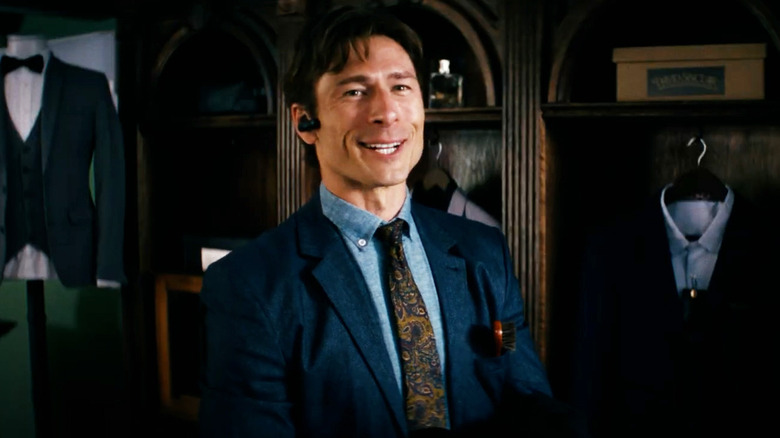
If there's one important thing to keep in mind with "How to Make a Killing," it's to manage expectations for its comedic elements. "Kind Hearts and Coronets" is a masterpiece of dry British comedy, so it'd be reasonable to expect an American remake to follow along the lines of something like "Succession." Yet John Patton Ford seems to mitigate the comedic potential of the film, choosing instead to lean into a more Kubrickian form of satire, one which isn't dependent on quips and gags. One of the movie's strengths is its variety, exemplified by its actors and their characters. Yet while folks like Margaret Qualley and Ed Harris are playing their roles with film noir gravitas (however arch), people like Zach Woods and Topher Grace are going more for caricature. It all works, but it does make things like the latter two actors feel a little out of place, more than they would if the film was fully a comedy.
This approach extends to the murders depicted in the movie as well. In this area, the film hews closer to "Kind Hearts," allowing the murders to be more subtle, incidental, and wry instead of brutal or gritty. While this should appeal to fellow lovers of light comedy, it might feel like a let down to those hoping for a bit more bite to their satire. Ford isn't going for the uncompromising discomfort of someone like Bong Joon-ho in "Parasite," nor the genre maximalism of "Ready or Not," to name two recent "kill the rich" films. The closest Ford comes to either is letting Glen Powell lean into a Patrick Bateman "American Psycho" aesthetic, which is only there for the inference and its connections, not to promise a bloodbath.
John Patton Ford provides a sly antidote to wealth porn

Although "How to Make a Killing" doesn't quite live up to its comedic potential, it still retains a lot of power as a satire. John Patton Ford's first film, 2022's "Emily the Criminal," tackled the crime and criminality through a down to Earth, no-nonsense lens, and while "Killing" is a little more fanciful by nature, it also treats Becket's world as realistically as possible. It's the cinematic equivalent of playing things close to the vest, something which Glen Powell's performance (including his narration; the film is told largely in flashback) nails perfectly. Powell's Becket recalls similar upwardly mobile antiheroes like Saul Goodman or Michael Corleone, characters who seem to be living a wish fulfillment of righteousness, only to find themselves trapped by the persona they've built up.
It's this aspect which Ford addresses most subtly, ultimately making "How to Make a Killing" a cleverly scathing indictment of the American dream as it stands. It's also an impressively multi-layered indictment, too, for while it'd be easy (and rather popular) for Ford to point out how the haves and the have-nots aren't all that different from each other if they were able to switch places, the filmmaker instead leans into the complexity and systemic issues surrounding wealth and success. "How to Make a Killing" is a movie that sneaks up on you, and like Becket himself, doesn't simply stab you in the chest or punch you in the gut. Instead, it slowly poisons you, leaving you bewildered by the end as to how sick you and the country you live in has become.
/Film Rating: 7 out of 10
"How to Make a Killing" opens in theaters on February 20, 2026.