

A Knight Of The Seven Kingdoms Just Changed Game Of Thrones Lore In A Major Way
A falling star brings luck to those who see it, but spoilers don't. This article discusses major plot details from episode 3 of "A Knight of the Seven Kingdoms" and the "Hedge Knight" novella.
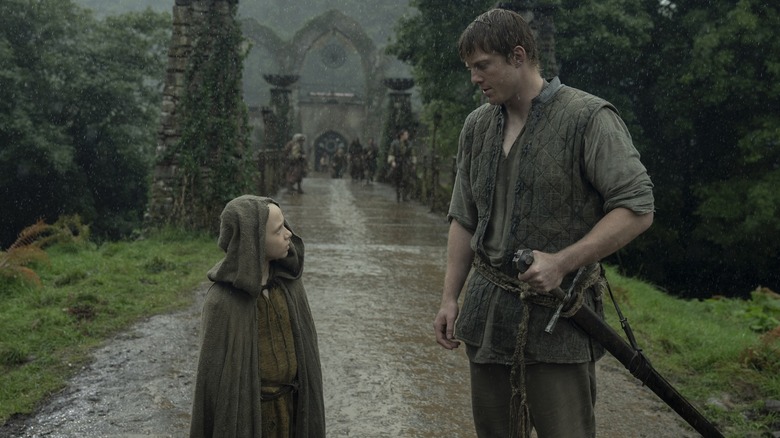
As much as "A Knight of the Seven Kingdoms" has successfully forged its own identity, separate and distinct from either "Game of Thrones" or "House of the Dragon," its latest chapter goes back to a playbook we know already works. Titled "The Squire" and officially marking the halfway point of the season, episode 3 will primarily be remembered for dropping a shocking twist and long overdue reveal. Yes, this is the moment book readers have been waiting for: when our supposed squire Egg (Dexter Sol Ansell) swoops in to the rescue of his stubborn hedge knight Dunk (Peter Claffey) and finally announces his true identity as Aegon Targaryen, the royal prince and youngest son of Maekar (Sam Spruell). But the other significant moment is a surprising divergence from the show's source material, which may have all sorts of ramifications down the line.
Who would've thought this episodic little adventure series would alter the franchise's lore to this extent? Earlier in the hour, Dunk and Egg casually make their way through the tourney grounds and encounter a fortune teller. According to her, Dunk will "know great success and be richer than a Lannister" — precisely the kind of vaguely positive response one would expect from a fraud. But when she turns to Egg, her prediction turns ominously specific. "You shall be king and die in a hot fire, and worms shall feed upon your ashes. And all who know you shall rejoice in your dying."
Dunk laughs this off and the episode quickly moves on, but the bizarre exchange lingers ... and for good reason.
A Knight of the Seven Kingdoms hints at the Tragedy at Summerhall
For those who haven't read author George R.R. Martin's three "Tales of Dunk and Egg" novellas and/or don't wish to know the ultimate fates of these characters from other sources (primarily Martin's "The World of Ice & Fire" book), consider this your last chance to heed our spoiler warning and head for the hedges.
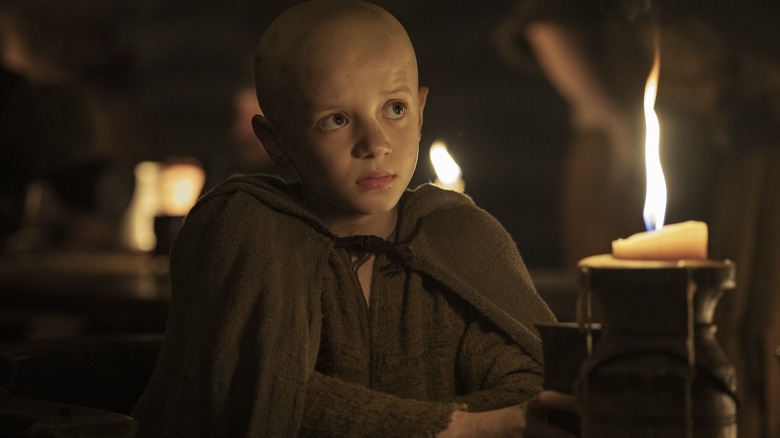
Still here? Well, let's just say we're getting the feeling that neither Dunk nor Egg ever bothered to sit down and binge through "Game of Thrones." Had they done so, they might've thought twice about the perils of indulging in a whim like getting their fortunes read in the latest episode of "A Knight of the Seven Kingdoms." Instead, clearly in a mood to be amused, Dunk tells this particular fortune teller to do her thing and potentially give them some insights into their destinies. While Dunk's was fairly innocuous (and not entirely accurate, based on what we know of his fate from "Game of Thrones"), the same can't be said for Egg's.
Ever heard of the Tragedy at Summerhall? For a writer seemingly obsessed with dark and depressing stories, Martin's canonical endpoint for both Dunk and Egg might actually take the cake. Decades down the line, Egg (er, make that King Aegon V Targaryen) becomes increasingly obsessed with bringing dragons back from extinction. Egg hosts a family retreat at the Targaryen vacation home of Summerhall intended to celebrate the impending birth of Egg's great-grandchild (Rhaegar Targaryen, who "Game of Thrones" revealed is Jon Snow's father). What happens next is still shrouded in secrecy, but all we know is that a devastating fire breaks out, both Dunk and Egg are among the dead, and Westeros' nobles aren't too broken up about it. Sound familiar?
Game of Thrones has a tricky history with fortune tellers, witches, and prophecies
If anyone in the "Game of Thrones" universe starts spouting prophecies and fortunes at you, that's probably a good sign to start running in the opposite direction. Subversive writer that he is, "A Song of Ice and Fire" author George R.R. Martin has always delighted in tearing down genre tropes and traditions. Despite a major exception or two, the age-old prophecy has been a particular target of his, following a more Shakespearean path of having characters destroy themselves in the attempt to avoid their fates.
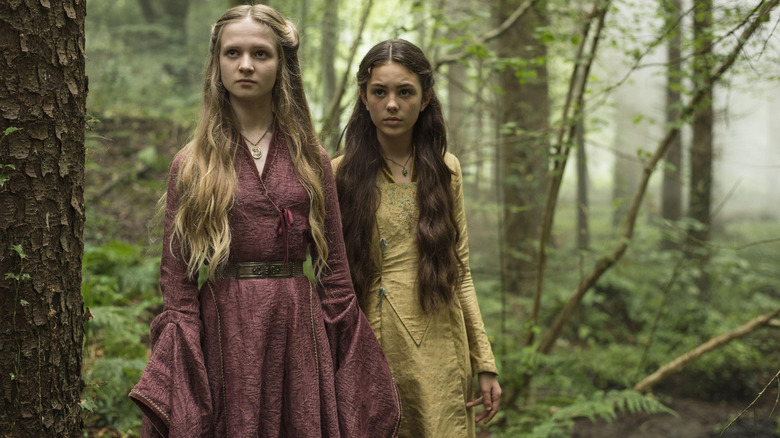
We saw this most pointedly back in season 5 of "Game of Thrones," when a flashback provides a glimpse into Cersei Lannister (Lena Headey in the present, Nell Williams as a child) and her motivations. When visiting a local woods witch known as Maggy the Frog (Jodhi May), Cersei is given an unwelcome window into what awaits her down the line: that she'll marry the king (though not Rhaegar, as she intends), that she'll be queen someday (but with a younger and more beautiful one rising up to overthrow her), and that she'll outlive her own kids. Naturally, this knowledge sets up her own downfall.
Could "A Knight of the Seven Kingdoms" be laying the groundwork for something similar with Egg? It's a chilling thought, but one that could perhaps play a more subtler role in the seasons to come. This is shocking and odd enough for young Egg to brush this aside in the moment, though perhaps it may eat away at him as he grows older. That grisly fate won't be depicted anytime soon, so we'll have to wait and see.
New episodes of "A Knight of the Seven Kingdoms" air every Sunday on HBO.