

How Starfleet Academy Is Redeeming Two Of The Most Disliked Star Trek Shows
Red alert! This article contains spoilers for episodes 1 and 2 of "Star Trek: Starfleet Academy."
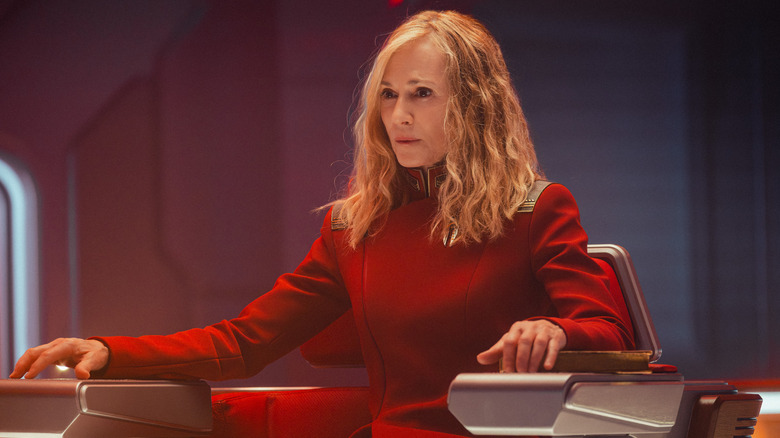
Who had this on their "Star Trek" Bingo card? "Starfleet Academy" is already living up to its young-adult trappings, unapologetically pitching itself to a very different segment of the fanbase than most other "Star Trek" shows and movies before it. But, just when more traditional and old-school Trekkies might've thought that there wasn't much for them in this latest series, the spin-off goes out of its way to surprise us once more. The castings of Holly Hunter as our new captain/chancellor Nahla Ake and Paul Giamatti as the villainous Nus Braka are certainly meant to rope in viewers of a certain generation, but that's not the only appeal for more established "Trek" fans.
"Starfleet Academy" hasn't shied away from its connections to a pair of the franchise's redheaded stepchildren: "Voyager" and "Discovery." Neither show would rank near the top of most anyone's "Best of 'Star Trek'" lists, but that only makes it even bolder and more commendable that this show's creative team would lean so heavily on both. One would think that the safest play would be to rely on more beloved and widely-accepted aspects of the canon — not two of the most divisive and broadly disliked. Nevertheless, that's exactly what co-showrunners Noga Landau and Alex Kurtzman have done, and that's not even the most shocking part of it.
Against all odds, "Starfleet Academy" is actually redeeming those less well-received productions by taking the best of both and spinning them into something new. Here's how it's pulling it off so far.
Voyager finally gets the closure it needed in Starfleet Academy
It'd be easy to point to the return of Robert Picardo's holographic Doctor in "Starfleet Academy" as the sole reason why "Voyager" is experiencing an unexpected new lease on life, but that's not the full picture. Yes, the fact that everyone's favorite medical officer is back and as lovably annoying as ever is a very welcome development. More than that, however, the show's premiere goes out of its way to give him (and, by extension, the various long-dead characters from "Voyager") the closure they never received in that previous "Star Trek" series.
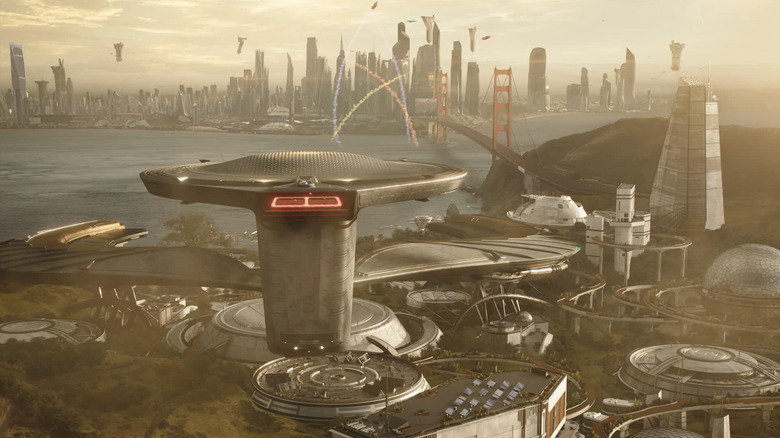
It all has to do with "Starfleet Academy" naturally moving the action to Earth. On a practical level, it just makes logical sense that we'd transition from the strange new worlds out in the cosmos back to Starfleet Academy's home base in San Francisco. But, more relevantly, the series' writers make sure to give this moment the proper weight it deserves — not just for our new main character Caleb Mir (Sandro Rosta), whose promise from his now-missing mother (Tatiana Maslany) involved returning to Earth, but also for the "Voyager" crew as well. As the USS Athena slides into its place at the Academy and literally transforms into the campus, one shot lingers on the Doctor's reaction on the bridge as he takes in the sight in front of him. Steadfast "Trek" fans know well how this was a moment denied to the original cast, as "Voyager" ended inexplicably in Earth's orbit ... despite the entire series building to the moment when its heroes finally come back home.
It's a minor moment in an otherwise packed premiere, but it's heartening nonetheless that "Starfleet Academy" has helped right one glaring wrong from "Voyager."
Starfleet Academy improves on Star Trek: Discovery by exploring the ramifications of the Burn
But the greatest miracle of "Starfleet Academy" has to do with its handling of the galaxy in the wake of "Star Trek: Discovery." That previous show didn't just leap centuries into the future, but it also introduced the concept of a galaxy-wide cataclysm known as "the Burn" — one that fundamentally altered the landscape of the universe and the Federation's place within it. The event resulted in the explosive loss of every single starship running on dilithium fuel and their crew ... which was pretty much all of them. Still, "Discovery" never had time to actually deal with the broader state of the galaxy and how so many worlds would've been affected by this.
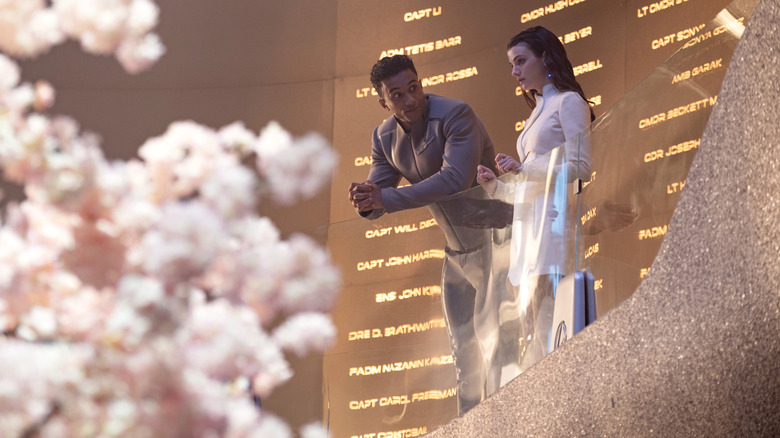
Not so in "Starfleet Academy." In the span of just two episodes, we truly reckon with the ramifications — not just of the Burn itself, but the resulting actions of Starfleet that set them on a troubling course in this far-flung future. The opening scene of the premiere flashes back to a more heartless version of Starfleet only 15 years prior, in which Nahla and her superiors render the harshest punishment imaginable on young Caleb and his mother for the crime of aiding and abetting Braka in post-Burn scarcity. But it's episode 2, titled "Beta Test," that introduces an outsider's perspective through Zoë Steiner's Tarima and the rest of the Betazoids. Their fateful decision of whether to reenter the Federation or not is a referendum on post-Burn Starfleet, and they do so with grace and poignancy. By reaching a compromise by the end of the hour, Starfleet comes a little closer to the ideals it spent all of "Discovery" trying to regain.
New episodes of "Starfleet Academy" stream on Paramount+ every Thursday.