

Avatar: Fire And Ash Once Again Confirms The Franchise's Real Hero

The "Avatar" franchise is James Cameron's magnum opus: a massive sci-fi epic into which he's poured every single idea he's had for decades. It's a story that has multiple moving parts and a huge mythology, and this is most clear in "Avatar: Fire and Ash." We've known for a while that the "Avatar" films are a family saga, with a story that is much bigger than just Jake, but this is the movie where that idea becomes clear.
"Fire and Ash" takes place immediately following the end of "The Way of Water," and sees the Sullys once again on the run. This time they're running from both a radical group of Na'vi zealots on a crusade to destroy the faith in Eywa, and the RDA — which is hellbent on capturing Spider and studying him after he miraculously becomes the first human ever to be capable of naturally breathing the air in Pandora. Oh, and the RDA is still committing atrocities against nature and massacring the tulkun for profit. It's a visually stunning movie, sure, but also the "Avatar" movie with the most plot and the most to say. It's a surprisingly religious epic that delivers on multiple levels.
This movie makes it clear we are moving beyond Jake Sully and highlighting other characters who will probably lead the fight in the future — like Lo'ak (Britain Dalton) who now narrates the film, or Spider (Jack Champion) and Kiri (Sigourney Weaver), who are set up as mystical figures. Then there's the one character who acts the most heroically in the movie, and brings together a mighty army after convincing an entire people to change their ways. That's right, it's Payakan the tulkun!
Payakan is the tragic hero of Fire and Ash
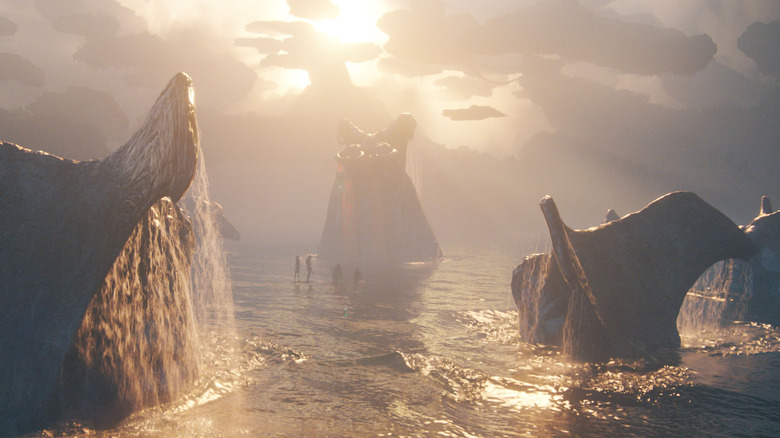
Payakan was the breakout star of "The Way of Water," Cameron's very expensive "save the whales" blockbuster commercial. The character has a fantastic design, exudes personality, and his appropriately tragic backstory instantly makes you root for him to go kill some humans. In "Fire and Ash," however, his arc comes full circle.
In the new film, Payakan faces retribution for helping the Metkayina in attacking the RDA in "The Way of Water." After being put on trial by the coolest-looking space whale courtroom in cinema, he is properly exiled for continuously trying to get his fellow tulkun to murder people — no matter how justified. That is, of course, until Payakan makes them see the error of their ways.
This is the boldest idea that Cameron explores in "Fire and Ash": that pacifism cannot be relied upon when facing annihilation. This is by the most violent film in the saga so far, and the one where Cameron is the most overt in his call to arms against imperialism. The first "Avatar" was heavily criticized for its redundant plot and its similarity to movies like "Dances With Wolves" and "FernGully," which are about rising up to defend one's home against colonial powers. "Fire and Ash" feels like Cameron outright grabbing the audience by their shoulders and screaming at them to fight back and forget pacifism.
Unlike other movies and shows about revolution, Cameron does not paint war as entirely bad. The Na'vi fighting back are not painted as rageful or hateful. They are entirely justified here, and the movie never asks you to forgive or even consider the colonizer's point of view.
Payakan's call to action
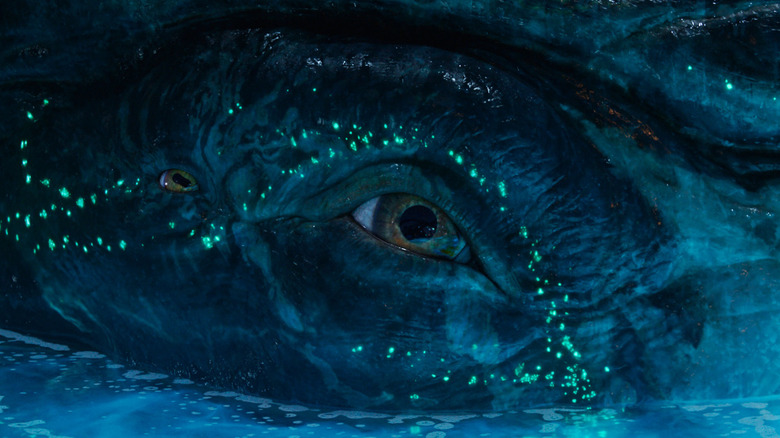
Cameron has admitted he added more Payakan to "Fire and Ash" after the response to his debut in the second film (via The Wrap), "There was such a strong emotional response to Payakan as a character that I had to build up his part in movie three," Cameron said.
Payakan is indeed a key character, a hugely important piece of the story, and also the breakout hero of "Fire and Ash." He is the one who defies the tulkun council, and who convinces the matriarch (and her immaculate jewelry) to finally accept that the tulkun can either move beyond their laws and fight the RDA, or they can die. He brings the biggest army to the final battle and secures a force to be reckoned with to the Pandora alliance.
Did we already get some of this in "The Way of Water?" Sure, but that criticism misses the point of "Fire and Ash," because that repetition serves an important purpose here. James Cameron purposely brings back thematic and plot elements from the second movie here in order to show the dangers of cycles and traditions. We needed to reiterate how important the no-killing law is for the tulkun in order to show how monumental Payakan's third act speech is, because it convinces the entire clan to acknowledge that tradition is useless when facing annihilation. This movie is all about the older generation realizing that their enemy does not play fair or respect tradition, and the young generation breaking through and changing ways to fight back.
Jake Sully (Sam Worthington) may be the face of the "Avatar" franchise, but at the end of the day, statues and Pandora-wide holidays should be established for its biggest hero — Payakan the tulkun.