

A Huge Element Of Avatar: Fire & Ash Was Not In The Original Script [Exclusive]
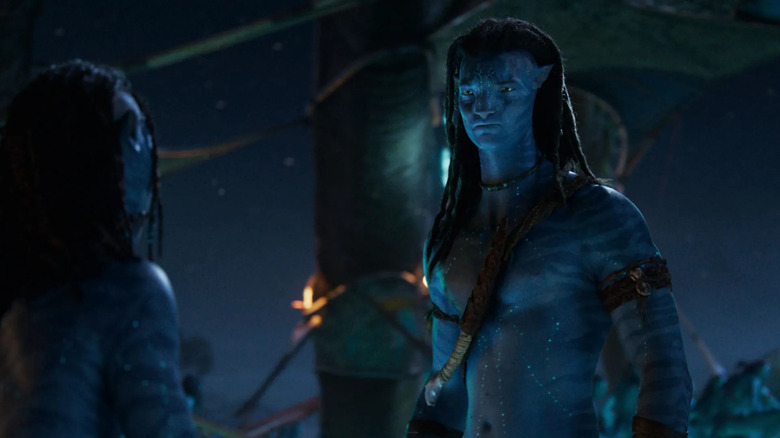
This article contains mild spoilers for "Avatar: Fire and Ash."
If you've seen or read anything regarding the making of the "Avatar" films, you already know what a fluid, multi-step process putting these movies together is for director James Cameron, his cast, and his crew. While both "Avatar: The Way of Water" and this month's "Avatar: Fire and Ash" went into principal photography with completed scripts, both films were far from locked until late into their post-production period. This was doubly true for "Fire and Ash," as the film enjoyed the benefit of Cameron doing a post-mortem on "The Way of Water." As the filmmaker told me during an interview on the eve of the release of the latest "Avatar," it was during a rewatch of an early version of "Fire and Ash" that he took a look at the film and said, "There's some things I might want to do a little differently."
As it turns out, one of those things included what ended up being a significant subplot in "Fire and Ash." Throughout the film, Jake Sully (Sam Worthington) undergoes several crises of conscience, one of which is his reluctance to become the Toruk Makto again as he did during the climax of the first "Avatar." Apparently, joining in tsaheylu with the Toruk brings out your darkest, most murderous self, and it's something Jake only wishes to use as a last resort.
It gives his eventual choice to use the Toruk extra dimension, and lends the end of the movie more dramatic weight. However, if it weren't for Cameron's willingness to listen to star Zoe Saldaña's feedback and the cast's flexibility, it would never have ended up in the film, for it was not in the original script.
The idea for Jake becoming Toruk Makto again came out of a character note from Zoe Saldaña
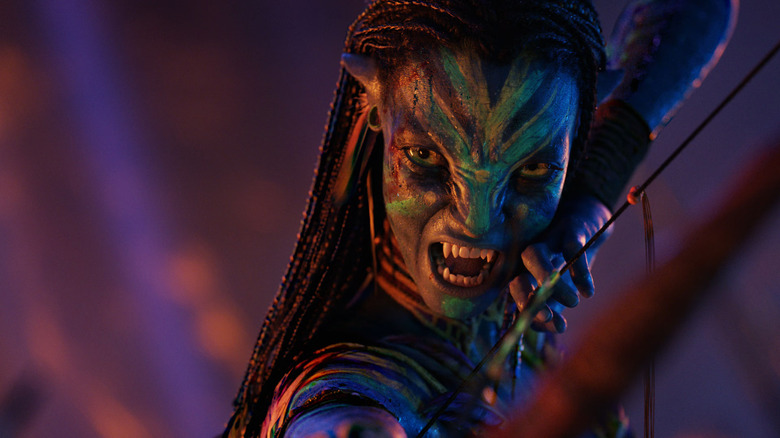
"Avatar: Fire and Ash" is a movie loaded with characters, setpieces, subplots, concepts, and more. It's all at once proof of how the film is bursting with ideas and imagination, as well as how easy it might've been for some things to get lost in the shuffle. As it happens, Zoe Saldaña, who plays Neytiri, found something lacking during the shooting of the film. As Cameron recalled when discussing the idea of Jake getting the Toruk again:
"And that came out of a conversation with Zoe, where she said, 'I think Neytiri needs to have more agency, Jake's making all the decisions.' I said, 'All right, let's play it in a way that she's owning and supporting what he's doing.' She's urged him to take action on behalf of the people. And now he's doing it and you see that she's expecting him to return. As opposed to, in the first film, she was like amazed and astonished that he did this thing."
From this character note, Cameron began to realize that having Jake become Toruk Makto again would be as dramatically compelling as it would be fulfilling both his and Neytiri's characters. It would also parallel the events of the first film, making "Fire and Ash" feel more like a full-circle story than perhaps it originally did. Of course, having the idea to go back and add this new subplot to the film is one thing. Making it happen is another thing entirely, and in the case of a normal movie, it would be prohibitively expensive as well as logistically difficult. However, neither was the case with "Fire and Ash."
Cameron utilized the cast's love of 'Avatar' to come back
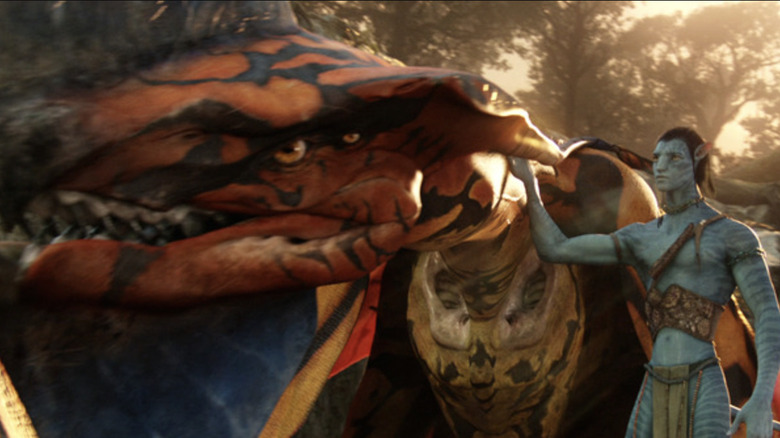
The performance capture aspect of shooting the movie helped ease costs with regard to things like props and sets. Additionally, the film's cast was apparently more than happy to come back together, as Cameron explained:
"They love to come back. This is like their home base, this is like their creative family that they're happy to come back to no matter what else they've been doing, what TV shows or movies they've been doing, they love to come back. We just get the band back together, we go on a little short tour, and then I come out of it with some new scenes."
What Cameron is describing is, essentially, the idea of making reshoots part of a film's editing and revising process. It's a practice that has been utilized by many a blockbuster genre film over the last decade and change, especially the Marvel Studios films. Yet where those movies require more consideration and prep time for their actors, the performance capture aspect of "Avatar" streamlines those concerns. Cameron continued: "But the beauty of it is we can just get back together and do it. And everybody was like, 'Yeah, Jake should get the Toruk! Let's do it!'"
While a lot of work and even a little bit of shooting has already taken place for the fourth and fifth "Avatar" films, what will actually be seen in them is anyone's guess. Including James Cameron's, to a degree! This is how serialized filmmaking should be: generally planned out, but flexible enough to be spontaneous.
"Avatar: Fire and Ash" is in theaters everywhere.