

Why The Biggest Criticism Of Avatar: Fire & Ash Misses The Point
Eywa has no dominion here ... but spoilers do. Read no further if you haven't yet watched "Avatar: Fire & Ash."
16 years after "Avatar" changed the blockbuster landscape forever, and three years after "The Way of Water" brought the franchise back in style, James Cameron has served up another return visit to the paradise moon of Pandora, and it feels so ... familiar? That one recurring complaint ultimately made up the gist of the first reactions to "Fire & Ash," even as the same critics and journalists generally heaped praise on the film. Still, many noted how much this threequel seems to be cribbing from "The Way of Water," recycling several of the same plot points rather than pushing the envelope further. For the first time in the property's existence, this gorgeously-detailed fantasy setting (the same one that literally left fans depressed that they couldn't visit in real life back in 2009) comes loaded with the additional baggage of "Been there, done that."
But what if that's precisely the point — or, at the very least, an issue that the film is knowingly and directly grappling with? Remember, this is the same director who intentionally distilled our biggest and most universal storytelling tropes into one extravagant work of science fiction, all in the pursuit of appealing to as broad an audience as possible. Hopefully, it should go without saying that he deserves some benefit of the doubt when it comes to handling the narrative for his passion-project sequels.
In this case, Cameron constantly invokes the very ideas of enabling cycles of violence, breaking free of old traditions, and navigating endless spirals of grief. Taken together, his ambitions couldn't be more clear. Those claims that "Fire & Ash" is spinning its wheels are missing the Na'vi rainforests for the trees.
Avatar: Fire & Ash deals with the aftermath of The Way of Water when most franchise sequels wouldn't have

What's this, a franchise film that actually deigns to address the consequences of the last one? Without simply brushing entire character arcs or plot developments under the rug? In this blockbuster economy? "Fire & Ash" may initially put audiences off, between its leisurely pacing and somewhat repetitive beats. But perhaps the true reason for this stems from moviegoers simply being unaccustomed to big-budget filmmaking that holds its own mythology with as much reverence and respect as it asks of us. In a world where Marvel Studios is already undoing Steve Rogers' happy ending by dragging him out of retirement for "Avengers: Doomsday," of course "Avatar" treating death and conflict with real weight feels as alien to us as the Na'vi themselves.
Although "The Way of Water" is essentially a self-contained chapter, several plot elements remain unresolved: the aftereffects of Neteyam's (Jamie Flatters) tragic death, the growing divide splintering Jake Sully (Sam Worthington) from his wife Neytiri (Zoe Saldaña) and stubborn son Lo'ak (Britain Dalton), and the ongoing rivalry between Jake and Miles Quaritch (Stephen Lang), to name just a few. "Fire & Ash" could've easily jumped forward in time to the next stage of this saga; instead, it sits in this messy aftermath to give its heroes (and villains) the attention and depth they deserve. Given the film's overlap in locations, themes, and characters with "The Way of Water," a certain sense of rehashing was always going to be unavoidable.
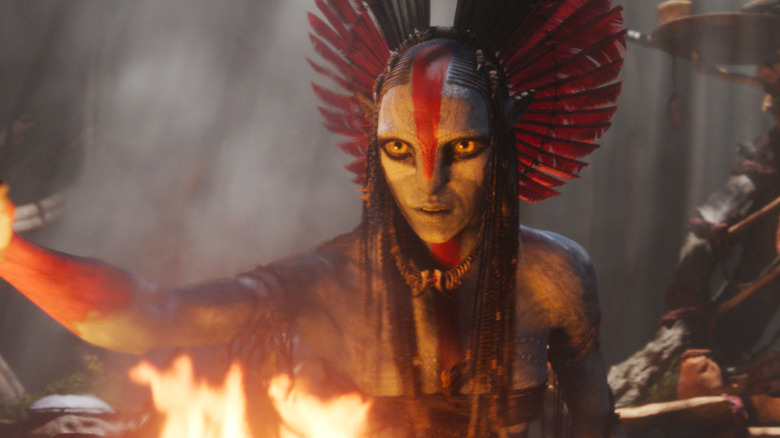
The true magic of "Fire & Ash" derives from introducing new and original concepts — Varang (Oona Chaplin) and the Ash clan, Spider's (Sam Champion) prominence, and Kiri's (Sigourney Weaver) connection to Eywa — in the midst of the familiar.
Escaping cycles of grief, violence, and tradition is a major theme in Avatar: Fire & Ash
"The fire of hate gives way to the ash of grief." Though not the literal opening line of Lo'ak's narration, this one quote early on sums up so much of what "Fire & Ash" is about: a reckoning with cycles of grief, violence, and tradition. The residual guilt and misplaced anger from Neteyam's death near the end of "The Way of Water" continues to send shockwaves through the Sully family "fortress." Meanwhile, the bigoted hatred Neytiri harbors for humanity reveals an even deeper issue — Jake remaining locked in a battle to the death with Quaritch, countered only by encouraging him to open his eyes to the Pandora his superiors could never understand. Underneath all of this simmers a far more philosophical question, in which the traditions of the "Na'vi way" clashes against Jake's human inclinations.
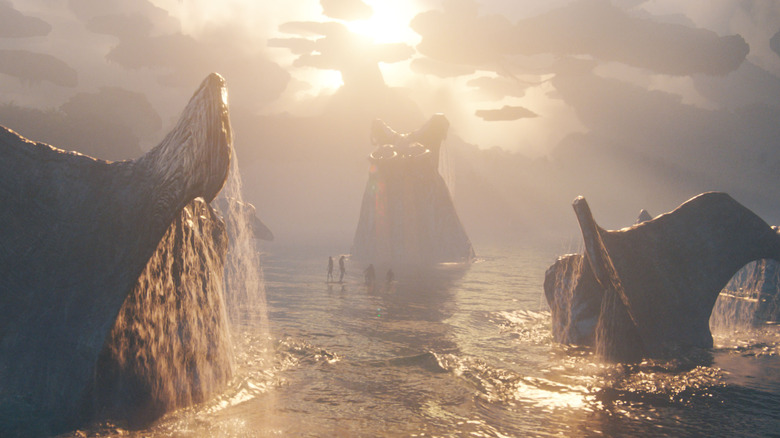
With all that in mind, how else could "Fire & Ash" have explored such meaningful material, if not through a poetically similar structure and framework in the script itself? This cyclical concern is reflected in numerous aspects, from the repeated imagery of Tulkun hunting (it's no accident that Brendan Cowell's one-armed Scoresby returns in the exact same role as before, like a destructive weed or cancer refusing to be stomped out) to another Sully/Quaritch tussle (which once more ends in a draw) to a final battle awfully reminiscent of "The Way of Water" (though even the whales break free of their own suffocating tradition of non-violence).
Like the Epic Cycle of Greek mythology or the "poetry" and "rhymes" of "Star Wars," "Avatar" puts its own twist on our collective human mythos. In the threequel, the results are as spectacular as ever. "Fire & Ash" is now playing in theaters.