

The Housemaid Director Paul Feig Borrowed A Few Tricks From Alfred Hitchcock [Exclusive Interview]
We may receive a commission on purchases made from links.
Paul Feig made quite a splash in the comedy world when he directed "Bridesmaids" back in 2011, and he followed it up with two blockbuster comedy hits in the form of "The Heat" and "Spy" before taking on the heat of the unnecessarily antagonistic fanbase of "Ghostbusters."
In recent years, as comedy as taken a backseat on the big screen, Feig has found another comfortable storytelling arena with female-led thrillers like "A Simple Favor" and its sequel, as well as the new movie "The Housemaid" starring Amanda Seyfried and Sydney Sweeney, tapping into a darker, twisted comedic sensibility that blends well with suspense and sensuality.
"The Housemaid" follows Sweeney as Millie, a struggling twentysomething living in her car, desperate to find a job to get back on her feet. When the opportunity to become a live-in housemaid comes up at the wealthy residence of Nina Winchester (Seyfried), she takes a chance to apply for the job. But the promising employment opportunity takes a dark turn when she realizes just how unhinged the matriarch of the household really is, creating a tense situation for Millie, as well as Nina's husband Andrew (Brandon Sklenar) and daughter Cecilia (Indiana Elle).
Seyfried is perfectly unhinged as Nina, and Sweeney makes for the perfect opponent, as Millie is also hiding a secret of her own — and that's not the only twist within this story (which is based on Freida McFadden's best-selling novel). Driving it all is Feig, who walks a careful tightrope between crafting an engaging thriller and a darkly funny comedy.
We spoke to Paul Feig ahead of the release of "The Housemaid" about striking the right balance between thrills and laughs, the secret to shooting a good sex scene, and more.
This interview has been lightly edited for clarity and brevity.
The challenge of balancing thrills and suspense with dark comedy
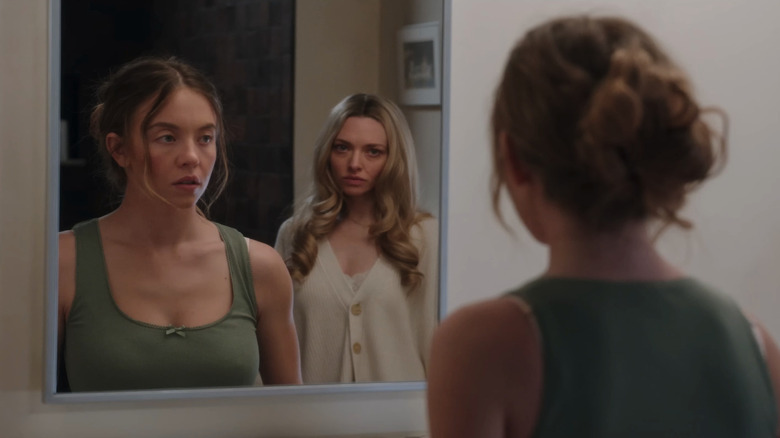
Let's start with an easy one. You make a cameo in this movie, but not exactly a traditional one. What's the clip of you that we briefly see in that one scene?
Paul Feig: That's from the first studio film I did called "I Am David" many, many years ago. And yeah, we had a TV montage and I was like, "What the heck? I'll put it in there."
That's so good. I love that. All right, so this movie does a very delicate high-wire act where it's darkly funny in a very twisted sort of way, but never to the point that you stop feeling anxious or worried about what's going to happen to the characters. As a filmmaker, how do you know when that balance is right before you get the movie in front of an audience?
You just have to make sure that you're putting the laugh or the tension break in a place where it should be, and not where it shouldn't be. I mean, you have to be true to the genre, first and foremost. Because I don't do spoofs. Even "Spy" is not a spoof. That's a funny spy movie. So you have to have those stakes. And if anything gets in the way of those stakes or makes the audience go, "Oh, come on, that's stupid," then you've kind of lost them. But if you're using the humor as a release of tension, then that's kind of how it is.
So as you look at the movie and the script and you're putting it together, you're like, "Okay, people need to be tense here. They need to be worried about this." And then, "Okay, now we can break it here" with whatever happens that allows you to go like, "Oh, thank God" or "Oh my God," and then you laugh. So it's that. It's just walking that tonal tightrope, really.
Did any of the movie start to shift once you got the movie into focus group screenings and realized, "Oh, this isn't working here, or we need to shift the tone of this here?"
No, the great thing about this is the book that it's based on is so good that the roadmap really works. That blueprint is really pretty foolproof. So, it was more for us going like, "Okay, we're too long here. Let's pull this back. We don't need this scene." But there was never any kind of restructuring we had to do, which was music to my ears.
The Housemaid draws inspiration from Alfred Hitchcock
I got some pretty big "Get Out" vibes from this movie. Was that on your mind when you were developing the adaptation, and what were some of your other cinematic influences?
I love "Get Out." I love Jordan Peele. I think he's brilliant. Actually, there's one scene where the PTA ladies and one woman's stirring her tea and I said, "Put that sound effect in. I want to hear that." So definitely that vibe.
But I'm probably most inspired by Hitchcock, I think. Just because I love the tone of Hitchcock movies, because they're tense and they're scary and they're thrilling and all that, but they're also kind of funny at the same time. Because he finds these funny side characters, and he was really good at releasing the tension with a laugh. So I think that's definitely a big influence for me.
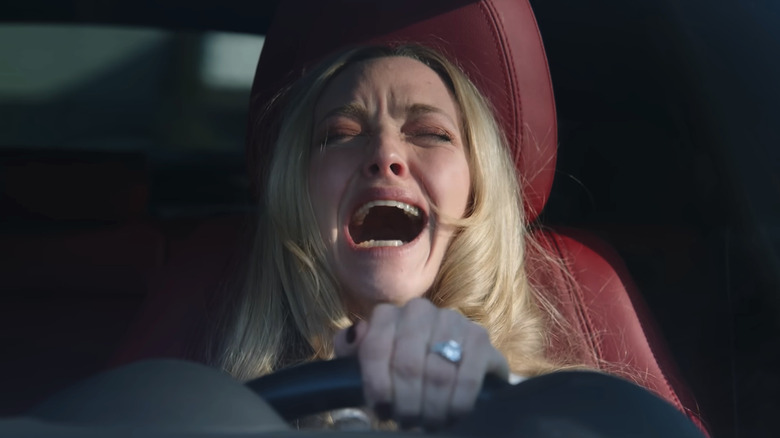
Amanda Seyfried is so perfectly unhinged in this movie. What were your discussions like with her about the character, especially when it comes to tapping into that intensity and just the wide-eyed rage that she has?
Yeah. I mean, she was really up for everything. And it was fun for us to kind of figure out how far can we push Nina in each scene, because the biggest thing was if she's just crazy and mean the whole time, she becomes a cartoon, and Millie would just be insane to just stay in this job, even if she needed it for the reasons that we find out she needs this job.
But it needed to be that push and pull of what we consider a crazy person to be, which is a flash of anger then like, "Oh my God, I'm so glad you're here. What would I do without you?" And then it turns into another [thing], so you're just always off your game.
I heard Freida McFadden who wrote the book saying that one of her inspirations for this was just some of the women bosses that she'd had who were so unpredictable. So it's really fun for Amanda and I to kind of find that balance.
Yeah, and I love that it wasn't a slow burn to get there. Literally the first morning after she's gotten the job, it's just an explosion.
Exactly. After being completely pulled in. We were able to, very fortunately, except for the attic scenes, which we had to shoot later because that was on a set, we were able to go in chronological order of shooting this.
Oh, okay.
So those first couple of days of just the house tour and the first interview, my only direction to Amanda was just like, "Just kookier, kookier and sweet." So then the next morning it's just like, you see it in Millie's face like, "What the f*** just happened? Who is this person?"
Paul Feig honed in on little details for The Housemaid sex scenes
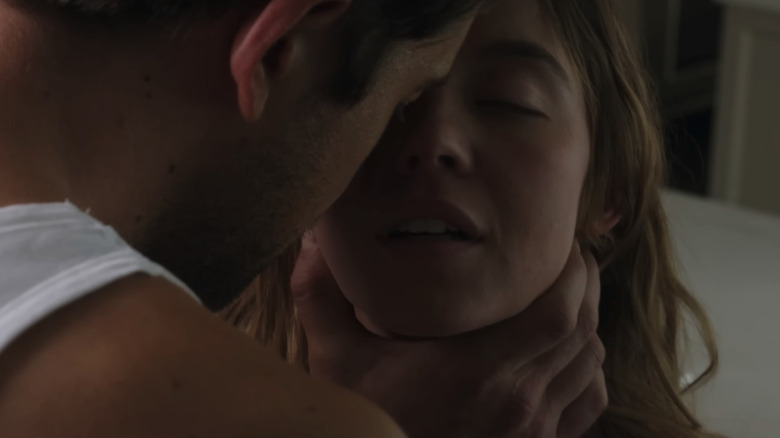
There's so much sexual tension in this movie. And I think we can talk about this without necessarily ruining anything, but what's the secret to directing a good sex scene? Is it the music? Is it a certain kind of lighting? I'm sure it helps when your subjects are two stunning movie stars, but I'm sure there's so much more that makes it work.
Yeah. Well, I mean, first of all, you need two people in front of the camera who are comfortable with it. And that's my biggest concern. I never want anybody to do anything they're not comfortable with. We had a great intimacy coordinator, Lizzie [Talbot], who was just great, but our actors were just really free. So what you needed for me to make it work, and I talked to a lot of women about this too, is it's more about details. It's not big wide shots of the act. It's the details of hands, of faces, of mouths, that kind of thing that makes it much more intimate and erotic without being male gaze-y. You know what I mean?
Right.
So yeah, it's that. And then look, you shoot a lot of stuff and you could go anyway, but also the audience when you do your test screenings kind of tells you. Like, "Okay, that's too much." So that was probably the one we played with the most, those two scenes, but I'm really happy with how they came out and people feel very comfortable watching them.
Yeah, absolutely.
'I need a f***ing sandwich'
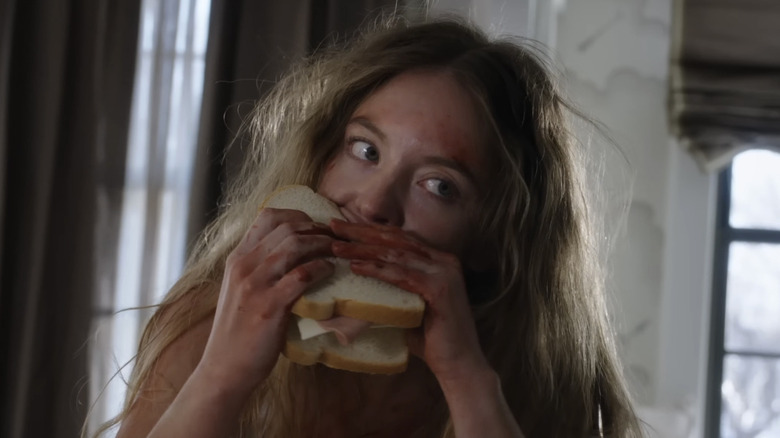
There's a line that Sydney Sweeney has at the perfect moment, and I won't say the events that precede it, so not to spoil anything, but she says, "I need a f***ing sandwich." And that feels like a moment that encapsulates so much about how we're feeling right now. How did that moment come about? Is that in the book? Was it in the original script? I want to know everything about that.
Yeah, it was in the script. I can't remember if it was in the book, to be quite honest. I'd have to look it up. But yeah, that's a perfect example of, that's where you need to release tension. That's where you can have a laugh after what she just went through. It's just like, "F***, I need a sandwich." But yeah, that's a perfect kind of illustration of when you go, "Let's let some of the air out of the balloon."
Yeah. Did you have any discussions as far as what the sandwich needed to be or...
No, it was actually Syd. We just put all these ingredients out and she made the sandwich.
Nice.
And what I love about that, she put giant pickles in the sandwich.
Yeah, I noticed!
And there's such tension when she's eating that because there's a giant pickle that's almost about to fall out. That's the most tense moment in the movie for me.
Paul Feig loves super cringey comedy, but it has to feel genuine
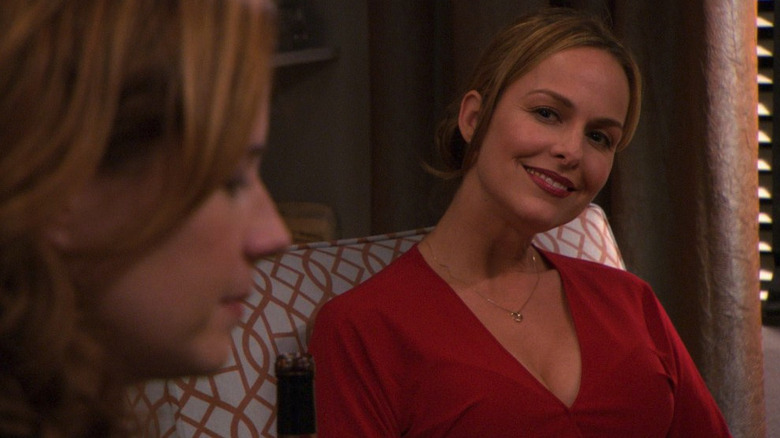
You directed some of the best episodes of "The Office," from season 2's Halloween episode to Jim and Pam's two-part wedding in Niagara. But I think many would agree that "Dinner Party" stands out among them. Did that episode inadvertently help you prepare for this movie? Because in some ways, it feels like they share a very similar tone.
Well, I mean, that's my favorite tone. I love super cringey, super like, "No, oh no," that kind of thing. I try to do it in my comedy, that's "Freaks and Geeks." That's why I think we got canceled. I think most audiences just were too ... it was too uncomfortable for them to watch.
Yeah, ahead of its time, for sure.
Yeah. But I mean, the "Dinner Party," that was just too much fun to do. Yeah, I mean, it's a funny comparison because the tension in that is so ... look, here's the thing: no matter if you're doing comedy, drama, anything, you have to take everything very seriously. So even though what's happening is funny, everybody in the scenes has to act like this is the most dramatic thing they've ever been through. That's why the "Dinner Party" works so well is like, everyone's uncomfortable. Michael Scott is angry about something and it just all kind of — yeah, if you do that, that's kind of the key. Treat it serious.
Yeah, exactly.
Paul Feig doesn't sound hopeful about the chances of making Spy 2
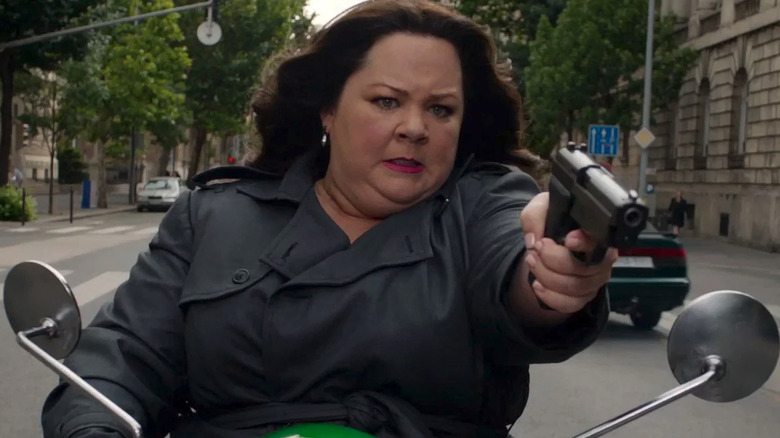
Finally, as I wrap up here, I wanted to ask if there had been any significant chatter about coming back around to making "Spy 2" happen, or has the state of big screen comedies today kind of made it difficult for it to get any traction these days?
I mean, people talk about it all the time. I don't know. I don't know if the spy, the action comedy genre is the place to go right now. I don't know. And also it's been 10 years, and I don't know. I used to say I don't want to do sequels, and then I did "Another Simple Favor," but that felt like five years, and we had an idea for a story that felt good. I definitely have an idea for a story for "Spy 2," but I don't know. I just don't know if that's the place to go right now. I'm having so much fun doing new things. And I'm so happy with "Spy."
Of course.
But sometimes to go revisit something, you kind of go, "Oh, we should have just left good enough alone."
Is it a bit of a bummer right now that there aren't as many big screen comedies being pushed forward, like from the days when "Bridesmaids" was one of the biggest box office hits of that year?
Yeah, it is a drag, because I mean, so much comedy has shifted to streaming, but comedy is meant to be a group experience. My last three movies — well, "The School For Good and Evil" was not a comedy, obviously, but "Jackpot" was, to me, it was just a balls out comedy. And first of all, the critics just f***ing destroyed it, because they wanted it to be some serious polemic on poor versus rich. I was like, "No, guys, I wanted to make a Jackie Chan movie." And a lot of people have been saying, "Well, you don't make comedies anymore." So I did it and it's kind of like, "Well, everybody s*** all over it." But also the problem was that it went right to streaming.
So we would do these test screenings and have this premiere, and the audience is going nuts and people are laughing and having this great time. You put it on TV and you just kind of sit there. And look, a comedy has to stand up on its own, but at the same time, I think the comedies that you love the most in your life, you saw in a theater and you've carried that experience with you every other time you've watched it on television. You still in your head hear where the audience laughed. So I think that's a really important thing.
"The Housemaid" is in theaters now.