

Canada's Heated Rivalry Destroys The Worst Trend Of American Streaming TV
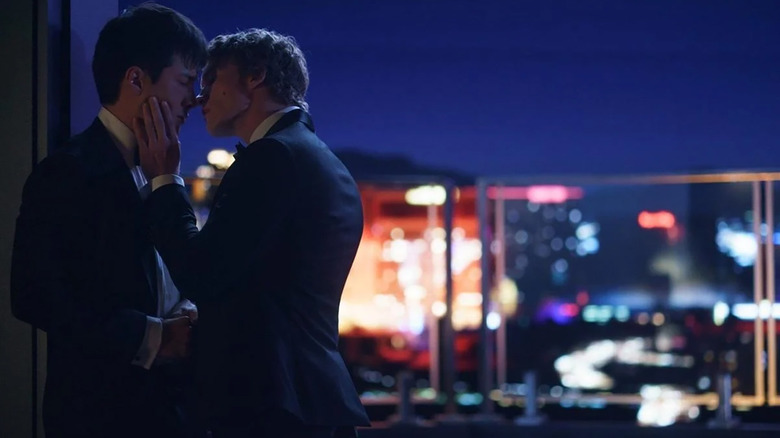
In the first episode of "Heated Rivalry," the steamy Crave Canada series based on Rachel Reid's hockey romance novels erupting on HBO Max, rookies Ilya Rozanov (Connor Storrie) from Russia and Canada's Shane Hollander (Hudson Williams) find themselves in the gym after becoming the first and second draft picks for Major League Hockey. Positioned as rivals from the very beginning, their competitive nature is always present. They pedal on stationary bikes as if they're in the final stretch of the Tour de France; breath ragged, sweat dripping, machines struggling beneath them.
When Ilya realizes Shane has forgotten his water bottle, he silently offers his own. Ilya dangles the bottle in front of Shane, letting their fingers graze in a way that appears anything but accidental. Shane tips the water into his mouth without letting the bottle touch his lips, and Ilya watches him, absorbing every subtle tic. "More," Ilya mouths, barely audible, and Shane obeys instantly. The camera catches the moment from just above Shane's arm, half of Ilya's face lit by the white of Shane's long-sleeve shirt. His whispered command lies in plain sight for anyone not glued to their phone.
A distressing trend in American streaming is the popularization of what Netflix calls "casual viewing," or the idea that shows and movies need to be crafted with the understanding that people watching aren't actually watching. It's a creatively bankrupt approach to storytelling that allows the most disinterested people to become the arbiters of what is prioritized by the biggest streaming platform in the world. It's a uniquely American approach, placing more value on the capitalistic benefits of capitulating to laziness rather than what's best for the story.
Thankfully, "Heated Rivalry" refuses to cater to anyone unwilling to actually pay attention.
Heated Rivalry is a show that commands your full attention
In a phenomenal n+1 Magazine piece, Will Tavlin made waves reporting that screenwriters who worked for Netflix told him that a common note they were given by company executives was "have this character announce what they're doing so that viewers who have this program on in the background can follow along." This mindset essentially reduces film and television to the visual equivalent of elevator music. Similarly, content creator Sarah Smith recently went viral on TikTok after she made a video reminding people that some of the pushback against critically acclaimed films once they hit streaming and become available to a wider audience is because many people are distracted by second screens, and blame the movie for their own inability to follow a plot they're not paying attention to.
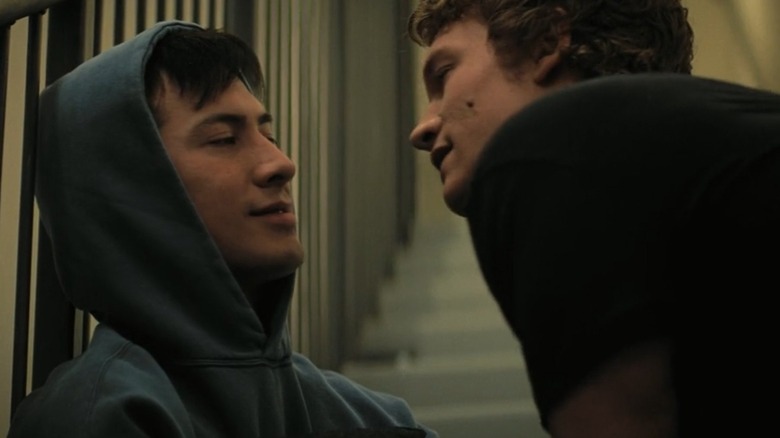
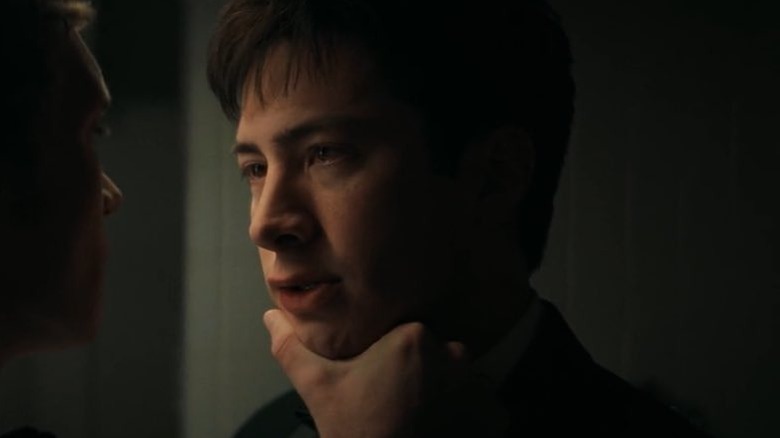
Much of the discussion of "Heated Rivalry" has centered on its willingness to depict explicit (and frequent) intimate scenes between two men, which has overshadowed the deserved praise of Jacob Tierney's writing and direction, and sincerely breathtaking lead performances. This is a show that explores character growth in what isn't said as much as what is said. Hudson Williams and Connor Storrie are both delivering some of the best microexpression work currently on television, emphasized further by the zoomed-in versions of their scenes shared on social media, their isolated expressions becoming catnip for fans to hyperanalyze (after episode 3, this also includes François Arnaud as
Scott Hunter and Robbie G.K. as Kip Grady). By refusing to have characters make bold declarations or grand speeches to tell the audience what they're feeling, "Heated Rivalry" forces viewers to be active participants. It's up to us to determine the meaning behind a glance, smirk, or foot tap under a press conference table.
The result is an active, vocal, and passionate audience, one that doubles as its own marketing team for the show.
Heated Rivalry is already one of the best adaptations of a romance novel
There are still plenty of American-produced shows that don't talk down to the audience and foster passionate fandoms (and every country makes its fair share of slop programming), but it's hard to envision "Heated Rivalry" existing in its current form developed anywhere other than Crave and crafted by anyone other than Jacob Tierney. For as "progressive" as America claims to be, our mainstream media output is conservative to the point of Puritanical, and there's an emphasis on catering to the ignorant, impatient, and incurious. Sure, people who don't want to watch "Heated Rivalry" for the plot can easily scrub through to the steamy parts, but if you want to actually watch the show, it cannot be done passively.
Even the text messages are microexpressions, with the truth of how Shane and Ilya feel revealed not only in the messages they type and send, but also in the ones they type and delete. And they never audibly narrate their texts — another increasingly annoying trend — forcing audience eyes to stay on the screen before them, and not the one in their pocket.
As the camera lingers on reactions longer than what has become commonplace, and the space between words is filled with the increased heart rate of the audience watching at home, the relationship between "Heated Rivalry" and the viewer feels like it's mimicking the desperate yearning between Rozanov and Hollander. Tierney's adaptation of Rachel Reid's novel is thus far not only one of the finest adaptations of a romance novel, but it's also a breath of fresh air in a streaming landscape actively suffocating its audiences. The show is seductive in its content, but it's the presentation that has exposed what American audiences truthfully desire.
No wonder Canada tops us on the map.