

Isaac Asimov Did Not Hold Back About Star Trek V: The Final Frontier
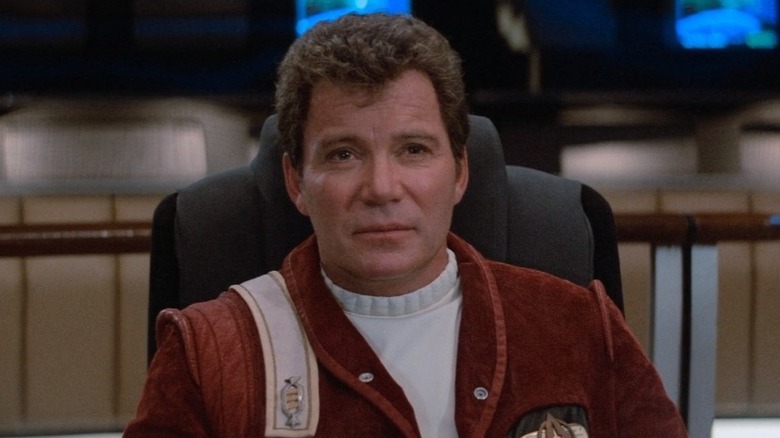
Author Isaac Asimov was as prolific with his opinions on other sci-fi series as he was with his pen. One area where he had multiple thoughts was "Star Trek." While he had good things to say, he was not encouraging when it came to the fifth feature film of the franchise.
"Star Trek V: The Final Frontier" isn't the most popular "Star Trek" movie for a number of reasons. Infamously, it follows the Enterprise crew as the ship is taken over by a supernaturally powerful preacher figure who is on a literal mission to find God. It's a premise that still has some fans scratching their heads.
The reasons for its shortcomings were apparent to Asimov before it was released. The movie was directed by Captain Kirk himself, William Shatner, and the story was conceived without franchise creator Gene Roddenberry's oversight. When Roddenberry finally saw Shatner' story treatment, he roped in Asimov for his opinion. After all, many science fiction writers had contributed to the "Star Trek" universe, and Roddenberry clearly felt the opinion of a genre legend would carry weight.
The two went back and forth, but in the end, one thing was clear: the treatment really wasn't good — for anyone who might watch it. Asimov opened up his memo to Roddenberry by saying:
I am sorry to say that I think it breaks with the rationalist tradition of STAR TREK.
Not a great start. From there, he criticized the plot as one that would move "the more educated and sophisticated end of the audience to embarrassed laughter." At the same time, he pointed to the film's irreverent posture toward religion as something that could offend sincere people of faith by what he called "so primitive a conception of God." He didn't stop poking holes. He talked about the lack of universal appeal of a Judeo-Christian worldview of God for a global audience, the watering down of Spock's intellect, and an overall lack of scientific intelligence.
Asimov thought Star Trek V was an out and out disaster
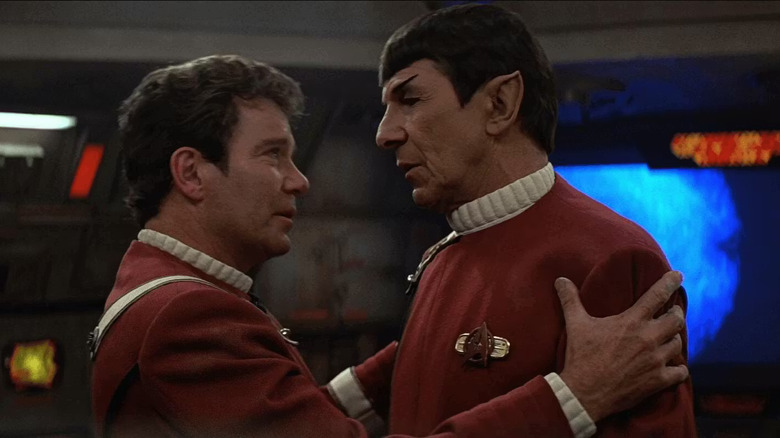
Asimov summed up his thoughts to Roddenberry twice. In the middle of his feedback, he said:
Why on Earth should STAR TREK meddle with such things and seize upon a subject that will be treated in a way that offends nearly everyone.
Then came the real kicker. He tersely wrapped up the memo by saying:
In short, I consider the treatment an out and out disaster.
Not great news for William Shatner and company. Asimov wasn't wrong, either. The movie's abysmal 5.5-star rating on IMDB bears that out, as does a chorus of commentary from fans online. Despite this memo from a sci-fi legend, Shatner's vision made it to the screen largely intact. By this point, Roddenberry had very little control on the "Star Trek" films (his involvement here was more or less a courtesy), and he was focused mostly on bringing the franchise back to television. It's clear that no one cared much about what Roddenberry had to say at this point, even if he had the father of modern science fiction in his corner.
Asimov's thoughts on "Star Trek" as a whole were kinder, though. In an interview at a "Star Trek" convention in 1973, he was particularly positive. He praised the franchise's ability to tackle previously unthought-of problems and show respect for intelligence in the universe. Asimov specifically loved the idea of the Prime Directive. He summarized his praise (which also explains some of his criticism for "Star Trek V") by saying:
Star Trek was, in a sense, the sanest, the most meaningful... it tackled real social problems. It was not devoted entirely to adventure. And most of all, it had fully realized characters.
Asimov's back and forth on Star Trek wasn't unusual
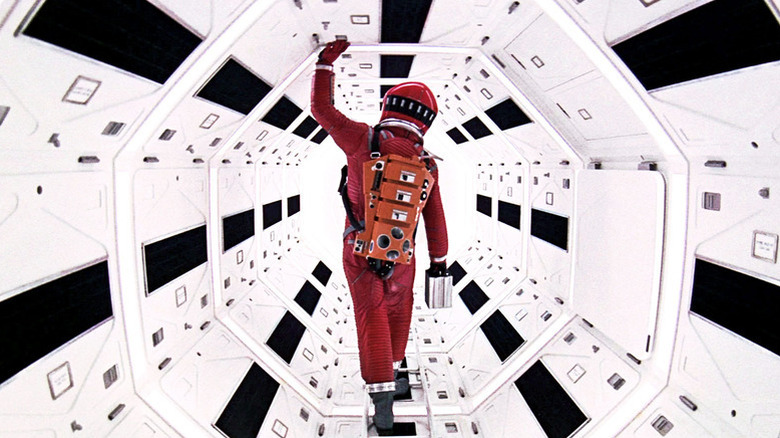
Asimov's judgment wasn't reserved for the expansive "Star Trek" canon. The man had opinions on other sci-fi projects, too. He had good things to say about the special effects of "2001: A Space Odyssey" and the film's ability to be scientifically accurate. On the flip side, Asimov didn't mince words when it came to his dislike for "Battlestar Galactica." He saw it as too close to "Star Wars" while mirroring all of that universe's "less attractive portions," saying he was "impatient with it." Again with the laconically damning statements, his summary was "One felt it was unworthy."
Some opinions were a little more balanced, or perhaps the right word is backhanded. For instance, he felt some novels, like Frank Herbert's "Dune" books, were good but built on sci-fi foundations he had created (in that case, literally with his "Foundation" novels).
It's the sign of an honest critic when you can praise a franchise while being willing to criticize its weakest links. In the case of Trekkies, there's no need to feel crestfallen when the father of sci-fi criticizes a part of your canon. Asimov was being honest, both in his praise and his critiquing, which is why his words, both kind and harsh, continue to resonate for fans right into the present.